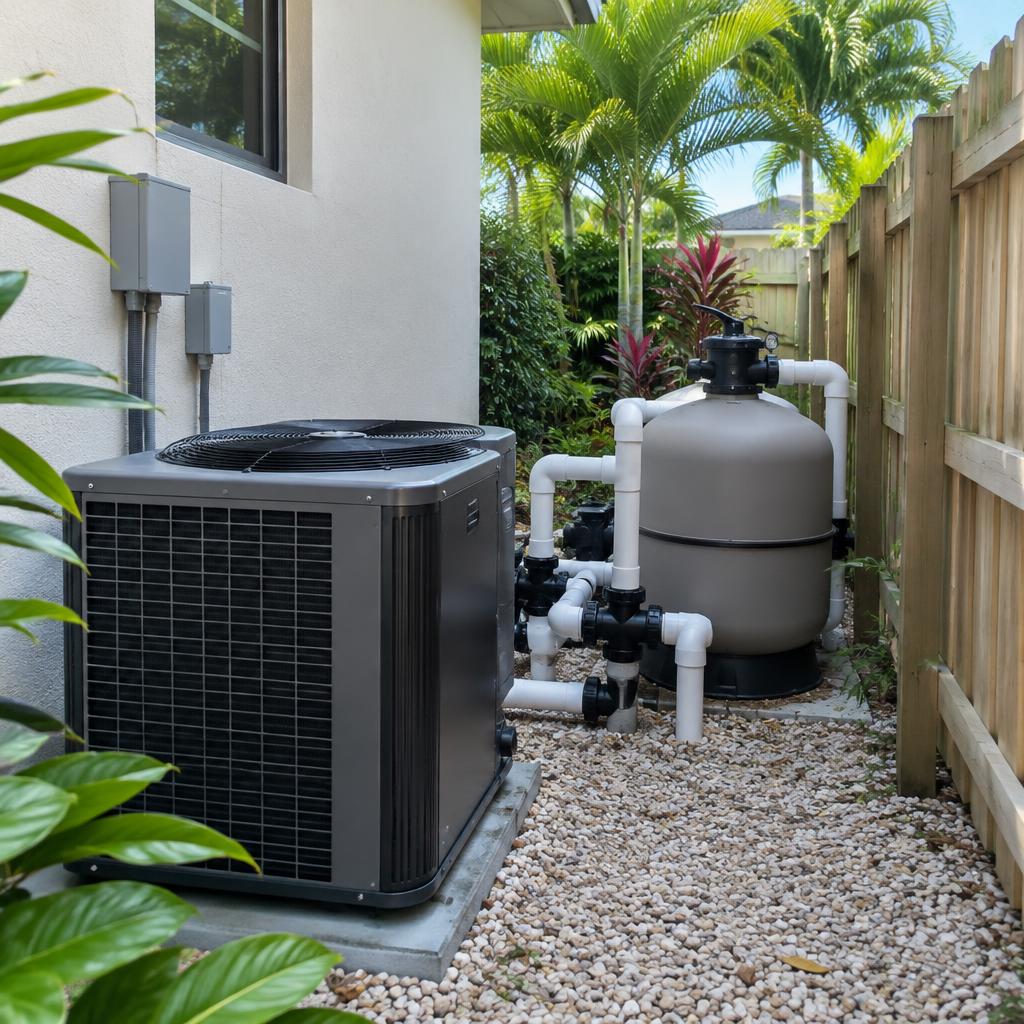
POOL HEATER GUIDE
When to Turn On Your Pool Heater in Florida: Month-by-Month Guide
By PureTek Pool Heaters · Last updated
A chilly pool in March can ruin a perfect Florida weekend. Many pool owners guess when to start the heater. Some switch it on too early and watch the bill climb. Others wait too long, and the water turns too cold to enjoy.
If you want to enjoy your pool, turn on your pool heater when the water drops below about 78°F. That usually happens from late November through March. This guide covers each month, a temperature chart, heater types, and simple ways to save energy.
Why Does Pool Temperature Matter in Florida?
Florida is a long state, so timing changes by region. North Florida cools off first, often by October. South Florida, including Boca Raton, stays warm longer. Winter nights there can still dip into the 50s°F.
Your pool setup matters too. A screened pool with full sun holds heat better. A shaded, windy pool loses heat fast. That is why you should watch the water, not the date.
What Water Temperature Is Right for Swimming?
Most people find water between 78°F and 84°F comfortable for swimming. Below 78°F, many swimmers feel chilly, especially children and older adults. Above 84°F, the water feels more like a warm bath. Use the chart below to decide when your heater should run.
Above 84°F — Very warm
Keep the heater off.
78°F to 84°F — Comfortable
Off, or set low.
72°F to 77°F — Cool
Turn the heater on.
Below 72°F — Cold
Heat before you swim.
Track Your Pool's Pattern
A floating pool thermometer costs little and gives you the exact number. Check it each morning in the cool season. Write down the readings for a week. You will soon see your pool’s pattern.
Month-by-Month Guide: When to Run Your Pool Heater in Boca Raton
In Boca Raton, plan to run your heater from late November through March. Add short runs in October and April when cold fronts arrive. May through September rarely needs any heat at all. The list below shows what to do each month.
January
Coolest month, cold fronts. Run the heater daily.
February
Still cool, chilly nights. Run the heater daily.
March
Warming up, some cool nights. Run it as needed.
April
Mostly warm. Use after cold fronts only.
May
Warm water. Heater usually off.
June to September
Hot water. Heater off.
October
Nights start to cool. Test the heater.
November
Water cools fast. Turn the heater on.
December
Cool nights, cold fronts. Run the heater daily.
Season by Season
These are typical patterns. Weather changes from year to year, so adjust as needed.
Winter (December to February)
December to February is peak heater season in Boca Raton. Water can fall into the low 70s°F after a cold front, so run your heater on a steady schedule. Keep the pool covered at night to hold in heat. Check the water temperature every morning.
Spring (March to May)
March and April bring warmer days, but cool nights can still chill the water. Use your heater only when the water drops below your comfort level. By May, sunshine usually warms the pool enough that you can switch the heater off for the season.
Summer (June to September)
From June to September, Boca Raton pools are usually warm without any help. Leave the heater off to save energy. Use this quiet time to book pool heater maintenance. Then your heater is ready before the first cool night of fall.
Fall (October to November)
In October, it is time for heater testing, even though you don’t need it yet. In November, the water will cool down very quickly. Heat the water when its temperature drops below 78 degrees Fahrenheit.
Example: Planning a Thanksgiving Pool Day
Suppose that your family would like to enjoy a pool over the Thanksgiving holiday weekend. The temperature of the water is measured at 73°F on Wednesday morning. Since this is cool, you begin heating the pool that day.
Heat Pump vs. Gas Heater: Does Timing Change?
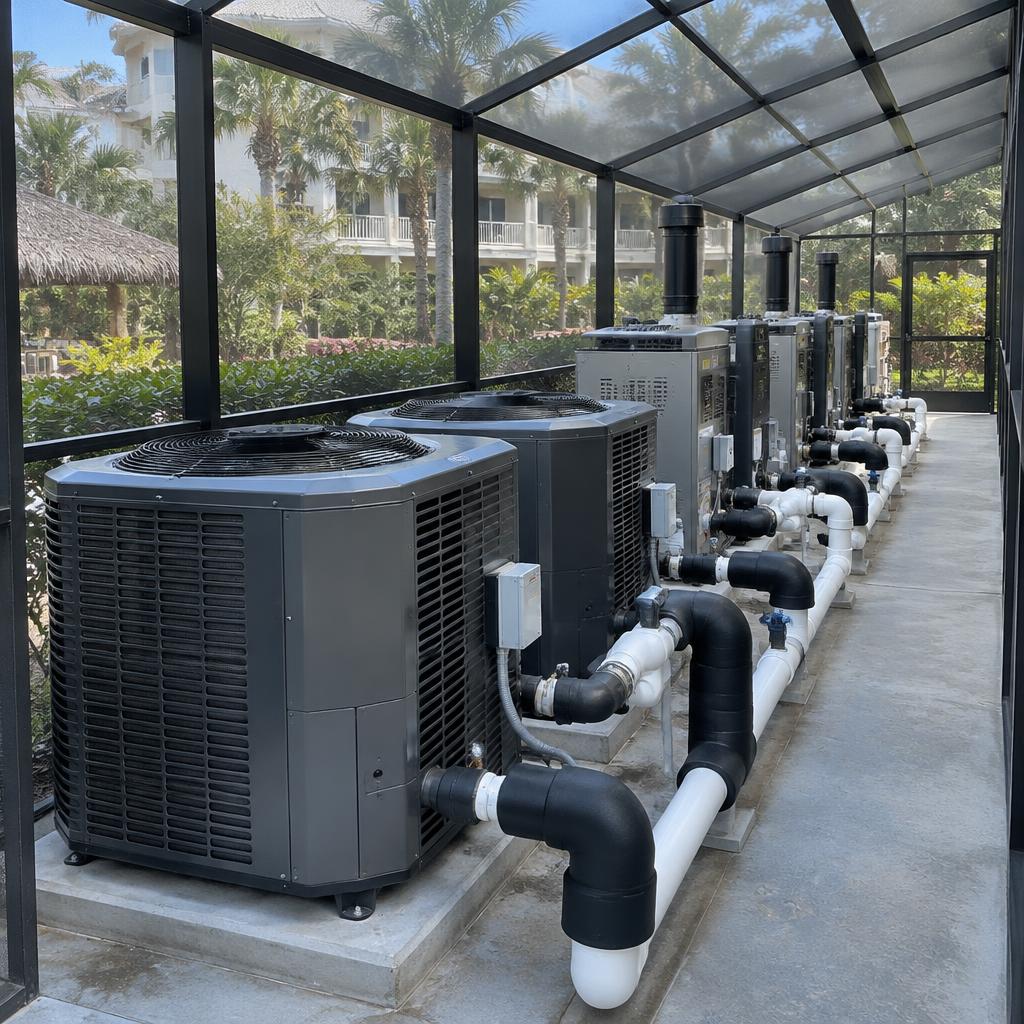
Yes, somewhat. The gas heater can heat up the pool quickly, so you can turn it on just before getting into the pool. However, the heat pump turns the cool water warm much more slowly than a gas heater, but is less expensive to run. It is more effective if operated regularly at regular times.
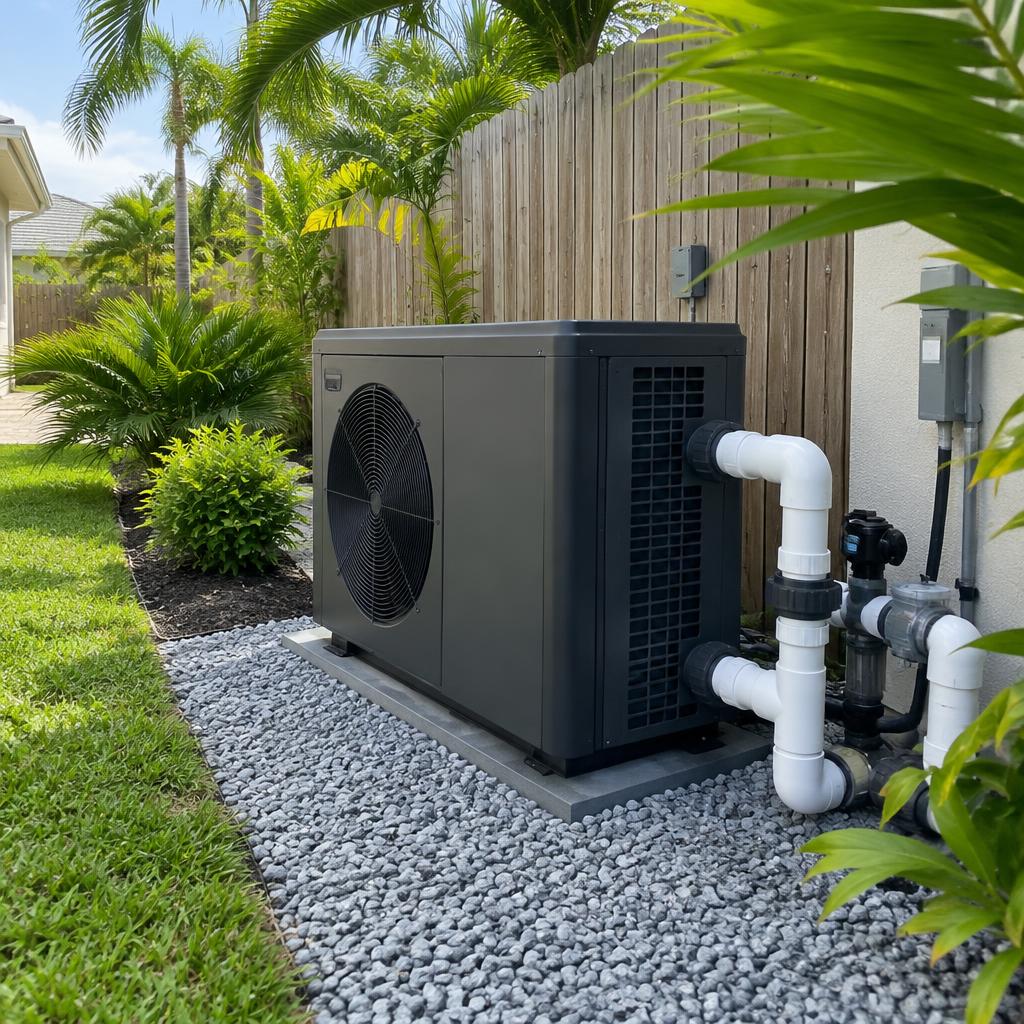
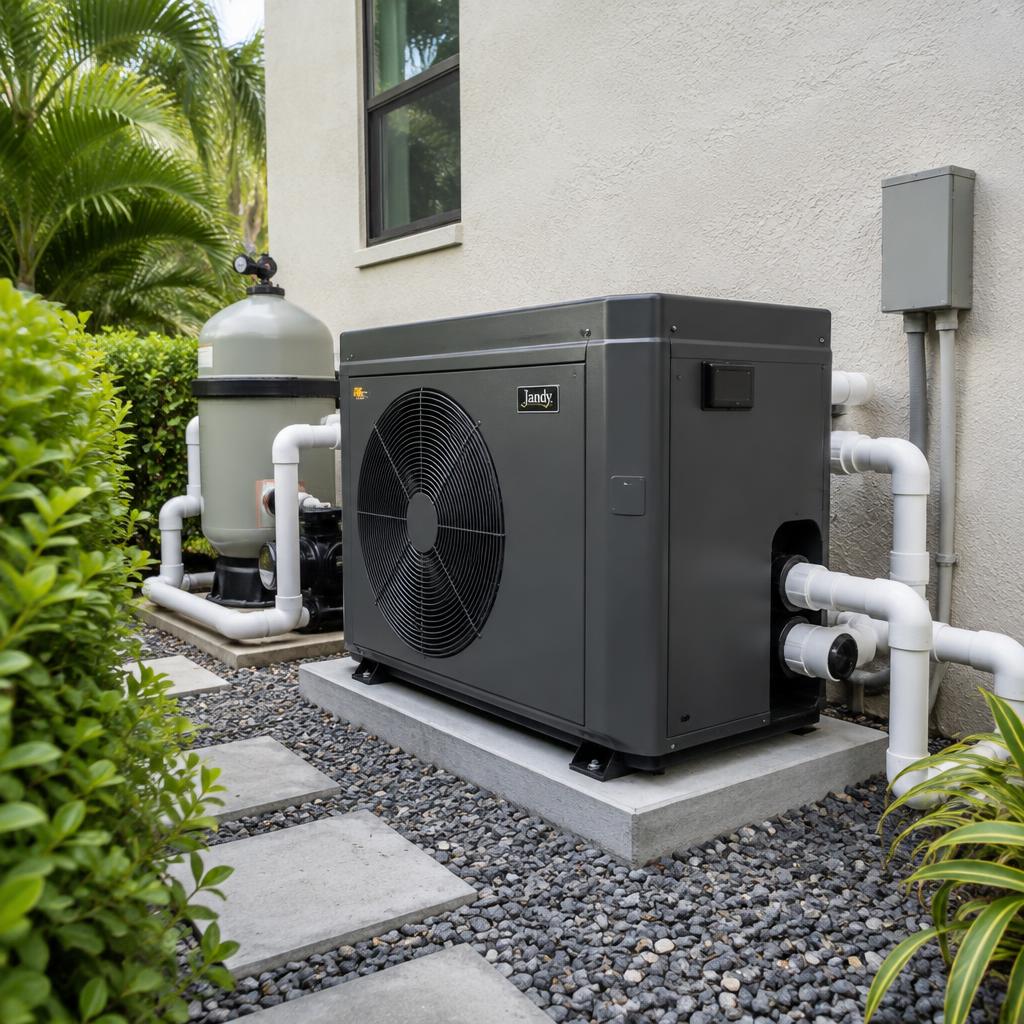
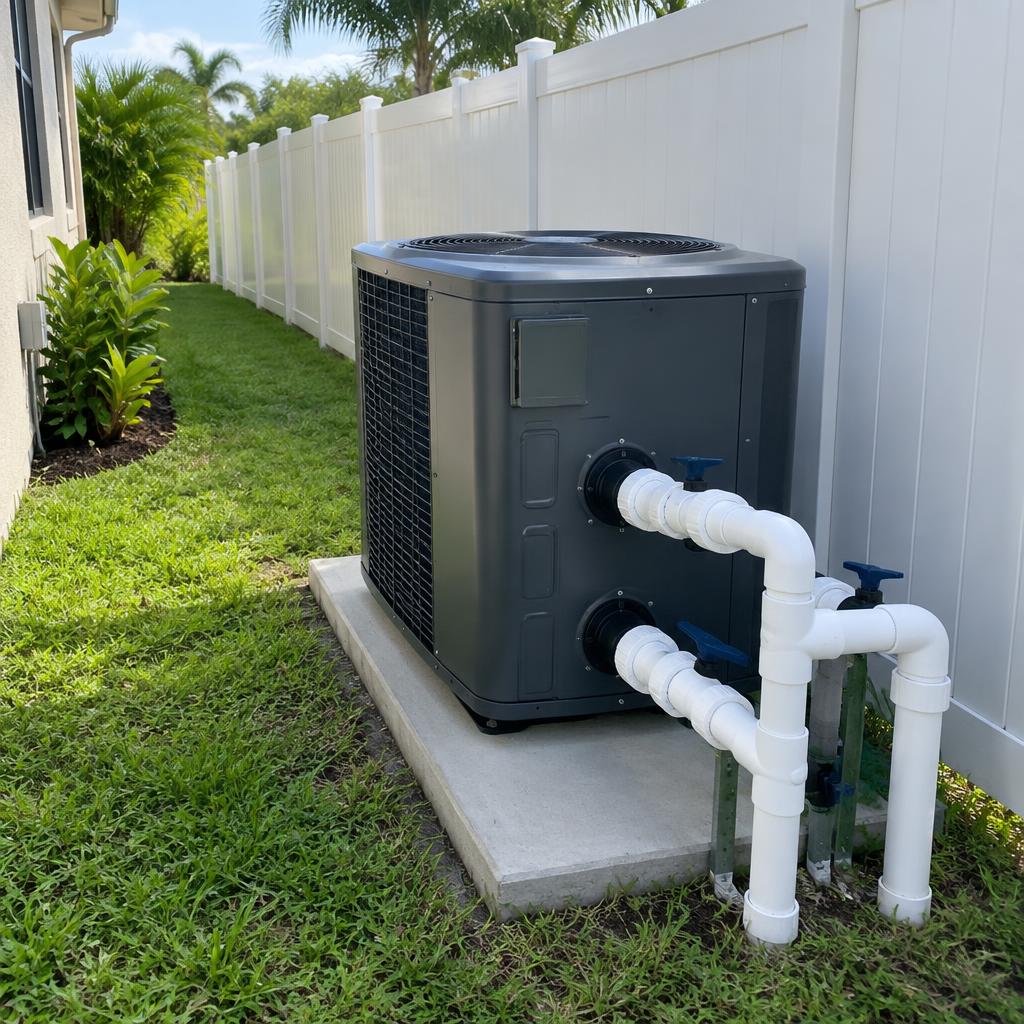
The heat pump is effective in the moderate temperatures seen in the climate of South Florida. It moves heat from the air to your water through electrical energy; therefore, it works effectively when the temperatures fall.
Want a deeper comparison to decide which could be the best option for your pool? Explore our heat pump vs. gas pool heater guide for running costs and upkeep.
How to Get Your Pool Heater Ready Before the Cool Season
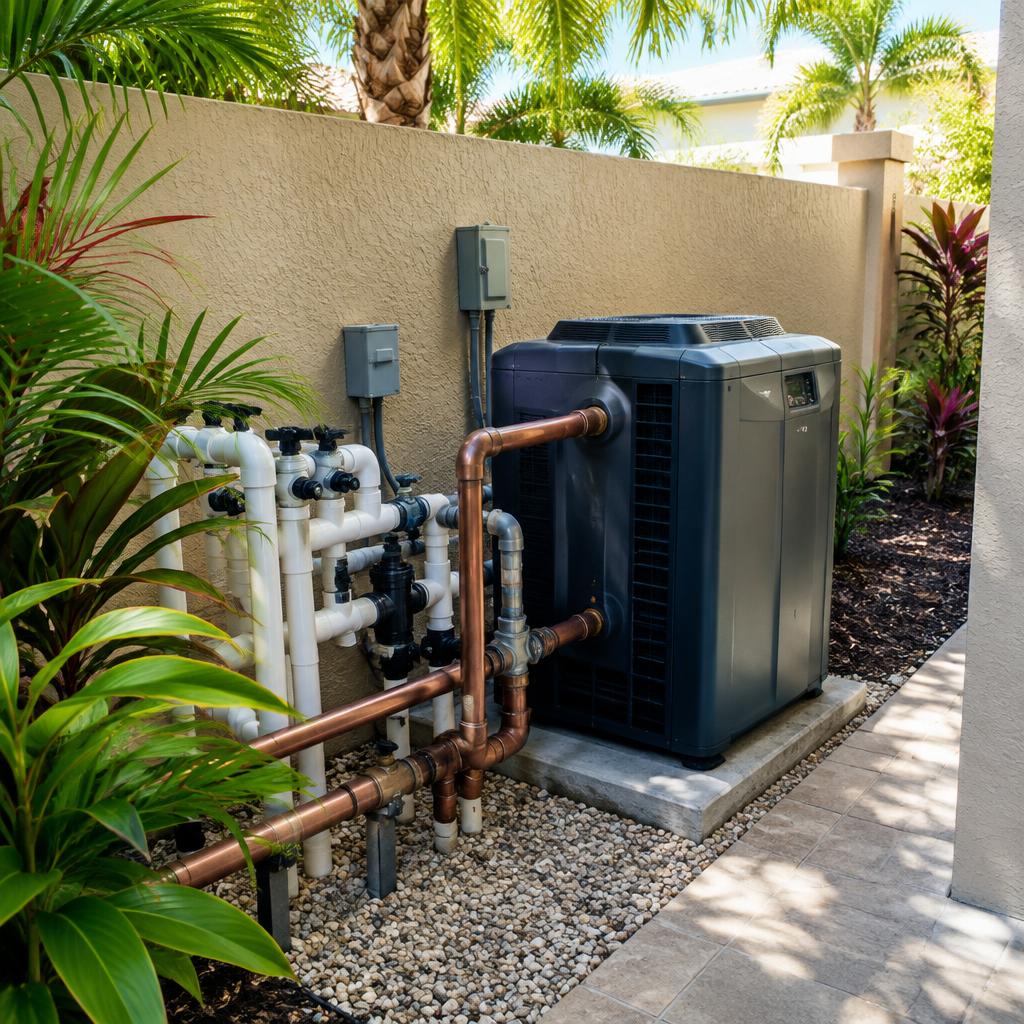
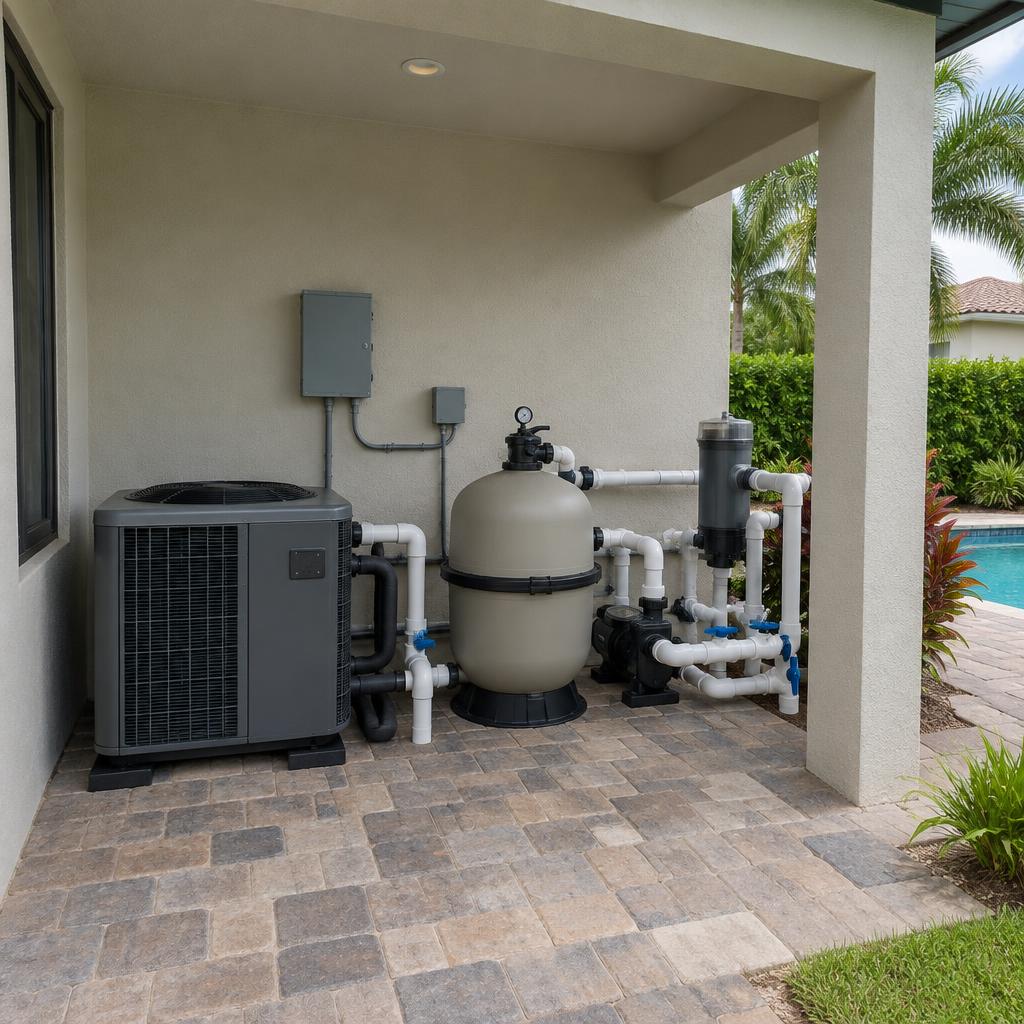
Look over your heater in October, before the first cold spell. Make sure there are no leaks, that there is no build-up around the unit, and that the thermostat is functioning properly. Otherwise, you will have a very cold pool on the first cold weekend.
Gas heaters need extra care. Never repair a gas line or burner on your own. Call a licensed technician for that work.
If something looks off, the licensed and insured team at Pure Tek Pool Heaters can inspect your unit. They service AquaCal, Raypak, and AquaComfort equipment and offer 24/7 emergency service across Palm Beach County. Homeowners looking for pool heater repair in Boca Raton can also book a visit ahead of winter.
Test run
Run the heater for a short test.
Listen
Listen for rattling, clicking, or loud humming.
Check for leaks
Look for drips or wet spots around pipes and fittings.
Clear the area
Keep plants and debris away from the unit.
Clean the filter
Clean the filter so water flows freely.
Watch the display
Watch the display for error codes.
Signs Your Pool Heater Needs Repair Before Winter
Your heater needs repair if it runs, but the water stays cold, shows error codes, leaks, or makes loud noises. Do not wait for the first cold front. Fixing problems early means your pool is ready when the weather turns.
When your heater quits on a cold morning, you may search for pool heater repair near me. Choose a licensed, insured team that finds the root cause first. Ask for a clear written quote before work begins. If your heater keeps failing, ask whether pool heater installation makes more sense.
Cold water
The heater runs, but the water stays cold.
No start
The unit will not start, or the display is blank.
Error code
An error code appears.
Leaks
Water leaks around the heater.
Short cycling
The heater turns on and off every few minutes.
Rust or odor
You see rust, heavy scale, or smell something unusual.
How to Save Energy While Heating Your Pool
Use a pool cover, set a steady target temperature, and run the heater only when you plan to swim. These three habits cut wasted heat. Small changes to your routine often lower heating costs without making the pool less enjoyable.
The U.S. Department of Energy lists pool covers and managing water temperature among ways to cut heating costs. Try these habits:
Cover the pool
Cover the pool when no one is swimming.
Lower it when away
Lower the setting a few degrees when you travel.
Use a timer
Use a timer so the heater runs only when needed.
Block the wind
Block strong wind with fences or landscaping.
Yearly maintenance
Book yearly maintenance so the heater runs well.
Keep Your Florida Pool Ready for Every Cool Day
Turn on your pool heater when the water drops below about 78°F. In Boca Raton, that is usually late November to March. Check temperatures weekly, test your heater in October, and fix problems early. A little planning keeps your pool warm and your costs under control.
If your heater is acting up, or you want a second set of eyes before winter, a local technician can check it for you.
Frequently asked questions
Late November is typical in Boca Raton. Start heating when the water falls below about 78°F, whatever the date.
Most families choose 80°F to 84°F. Pick the low end to save energy. Lower it when you travel.
Yes, but it uses more energy. A timer and a pool cover help you heat only when needed.
It depends on pool size, starting temperature, and heater type. Gas heaters are usually faster than heat pumps.
Not always, but cold fronts can chill the water from November through March. A heater keeps you swimming.
Turn it off when the water stays above about 80°F on its own, usually in April or May.
Related services
More guides
- Heat Pump vs. Gas Pool Heater in South Florida
- How Much Does a Pool Heater Cost in Palm Beach County?
- Pool Heater Not Heating: 7 Common Causes
- When to Repair vs. Replace a Pool Heater
- What Is the Ideal Pool Temperature? Swimming, Kids, Seniors, and Therapy
- How Long Does It Take a Pool Heater to Heat a Pool?
- How Does a Pool Heat Pump Work?
- What Size Pool Heater Do You Need? BTU and Sizing Explained
- Propane vs. Natural Gas Pool Heaters: Which Is Better?
- Inverter vs. Standard Pool Heat Pumps: Is the Upgrade Worth It?