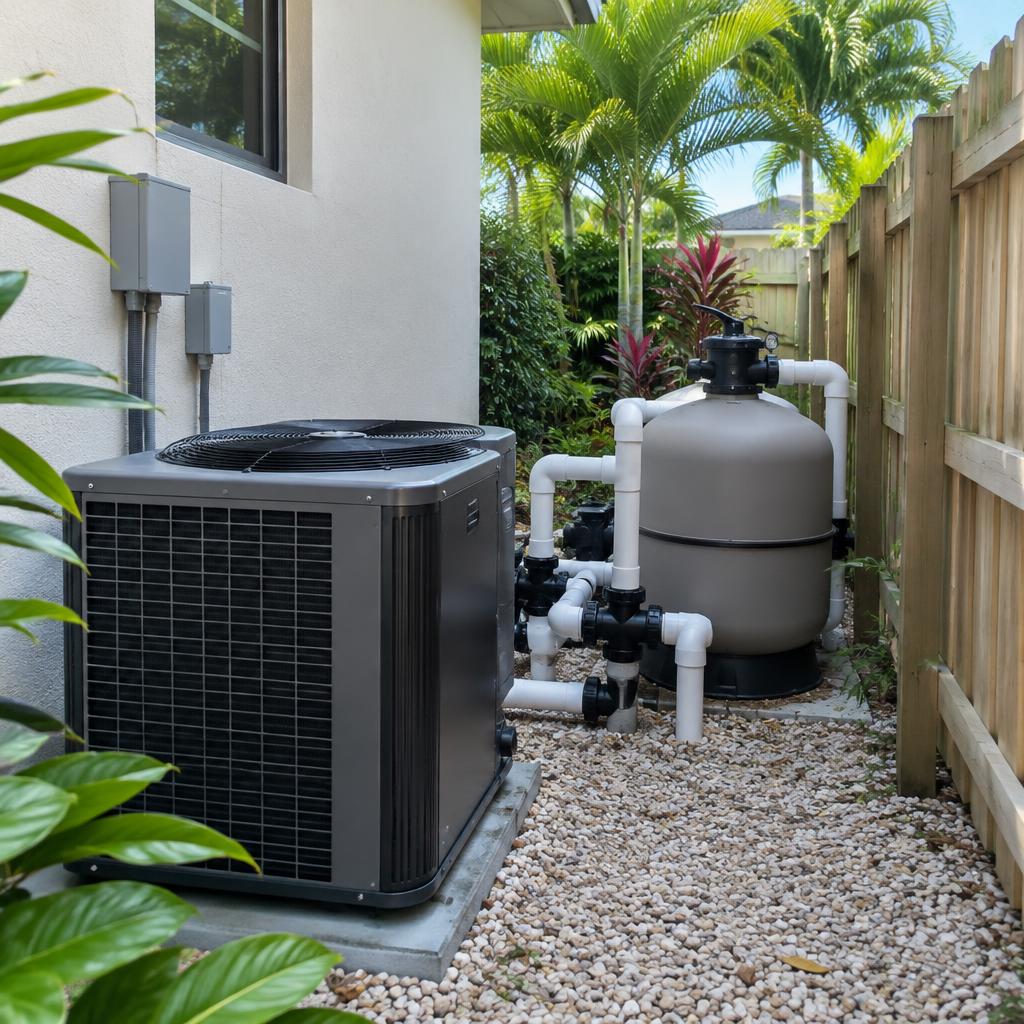
POOL HEATER GUIDE
How Does a Pool Heat Pump Work?
By PureTek Pool Heaters · Published
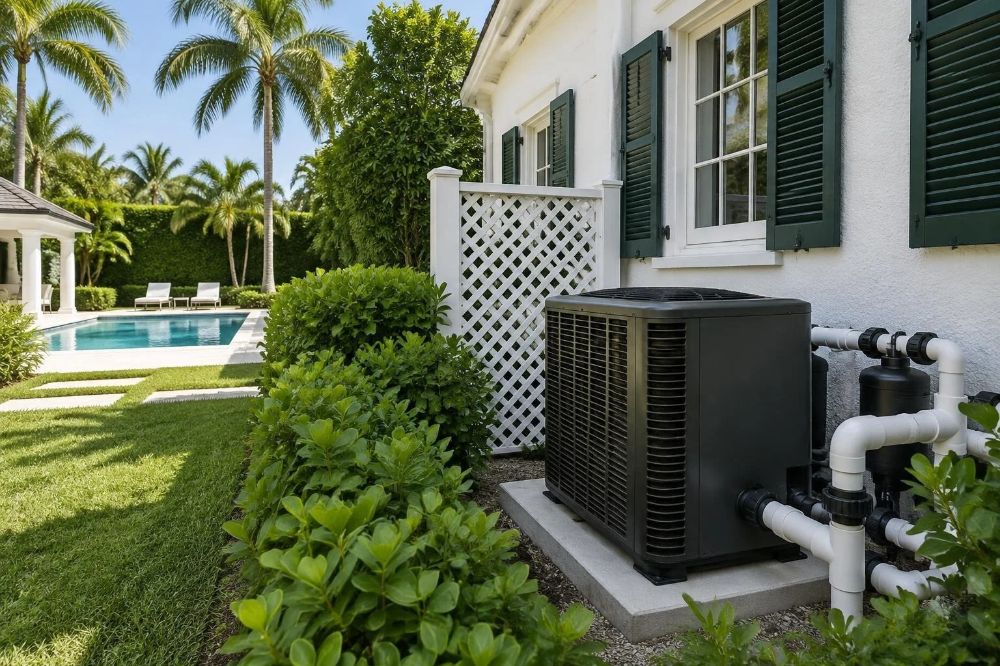
A warm pool makes swimming, therapy, and relaxation more enjoyable. But have you ever wondered how your pool heat pump keeps the water at your preferred temperature?
Unlike a gas heater, a pool heat pump does not create heat by burning fuel. It pulls warmth from the surrounding air and transfers it to your pool water. Understanding this process helps you recognize performance problems and know when your system needs professional attention.
A pool heat pump pulls heat from outside air and moves it into your pool water. A fan, a coil, a compressor, and a heat exchanger do the work in six simple steps. This guide explains each step, compares heat pumps to gas heaters, and shows how to keep yours running well.
How Does a Pool Heat Pump Work?
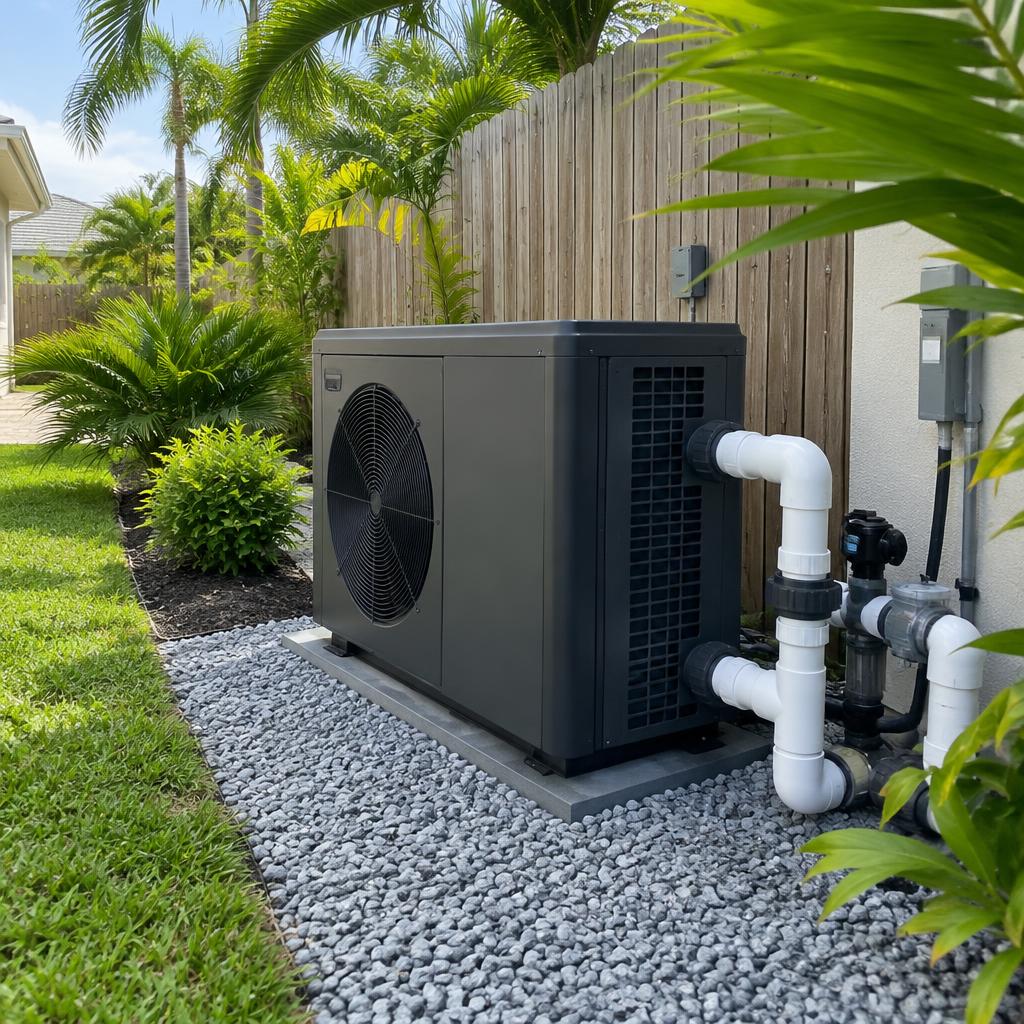
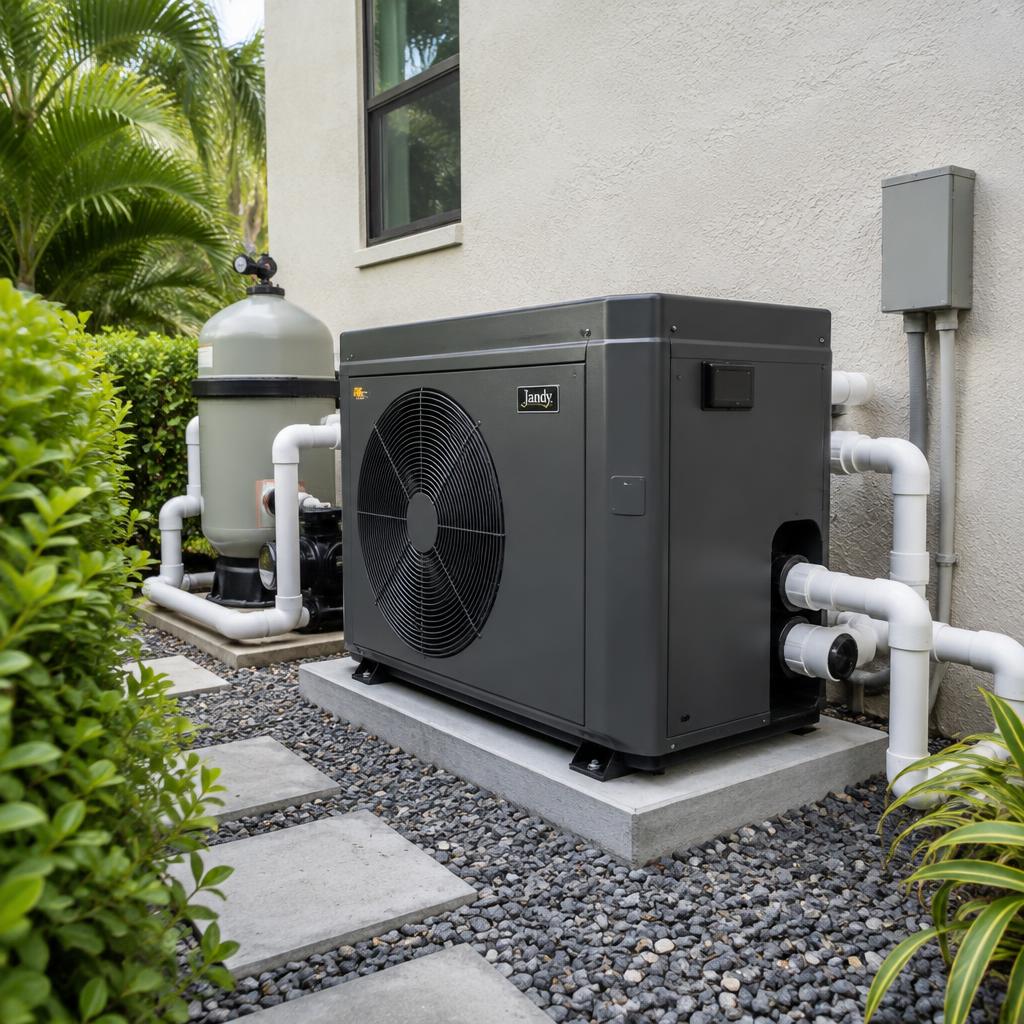
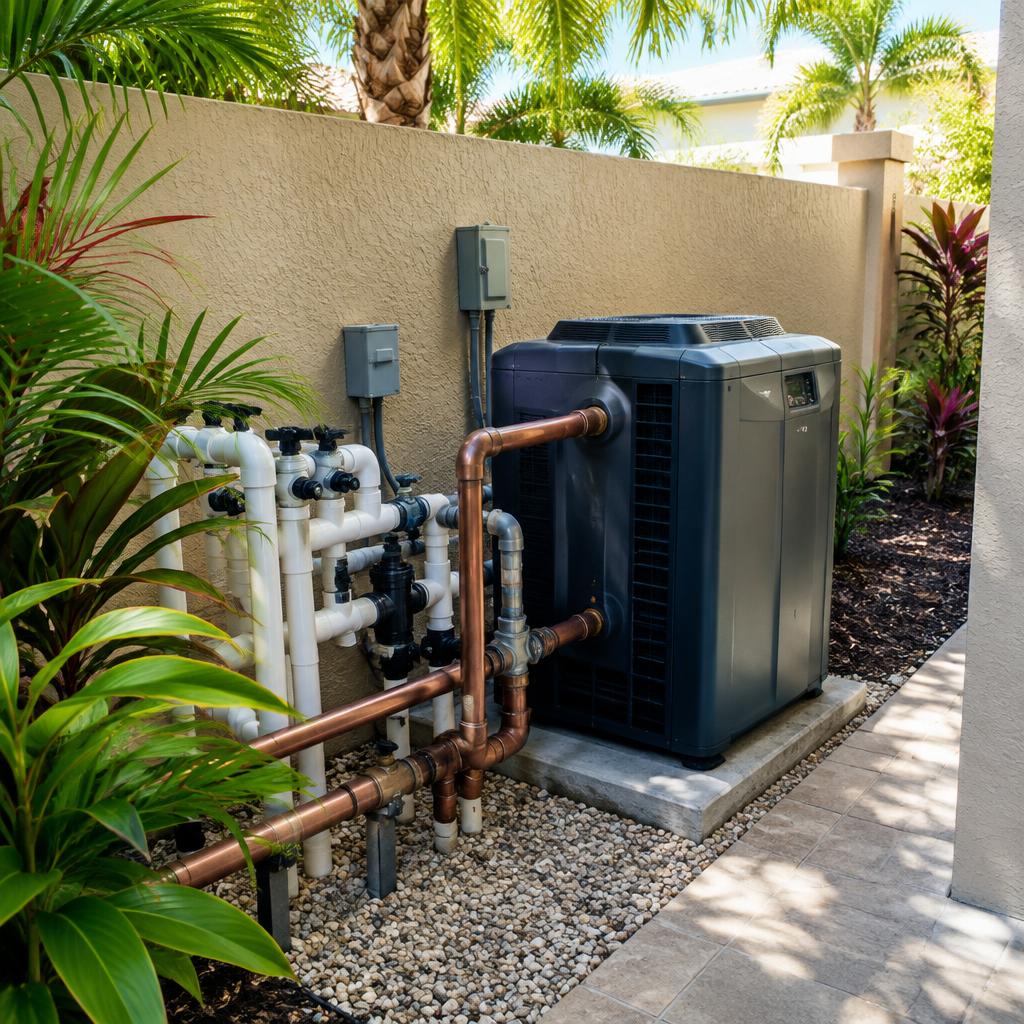
A pool heat pump uses electricity to move heat from the outside air into your pool water. Unlike a gas heater, it does not burn fuel to create heat. Instead, it collects the warmth already present in the surrounding air and transfers it to your pool.
Think of it as a refrigerator working in reverse. A refrigerator removes heat from inside its storage space and releases it into your kitchen. A pool heat pump does the opposite. It takes heat from the outdoor air and moves it into your pool water through a special refrigerant.
This process makes pool heat pumps highly energy-efficient. According to the U.S. Department of Energy, a pool heat pump can deliver 3 to 7 units of heat for every unit of electricity it uses. This means the system moves much more heat than the electricity it consumes.
The heat pump achieves this through four main parts: a fan, an evaporator coil, a compressor, and a condenser. Each part has a specific job in collecting, moving, and transferring heat. Together, they keep your pool water at the temperature you set.
The 4 Main Parts of a Pool Heat Pump
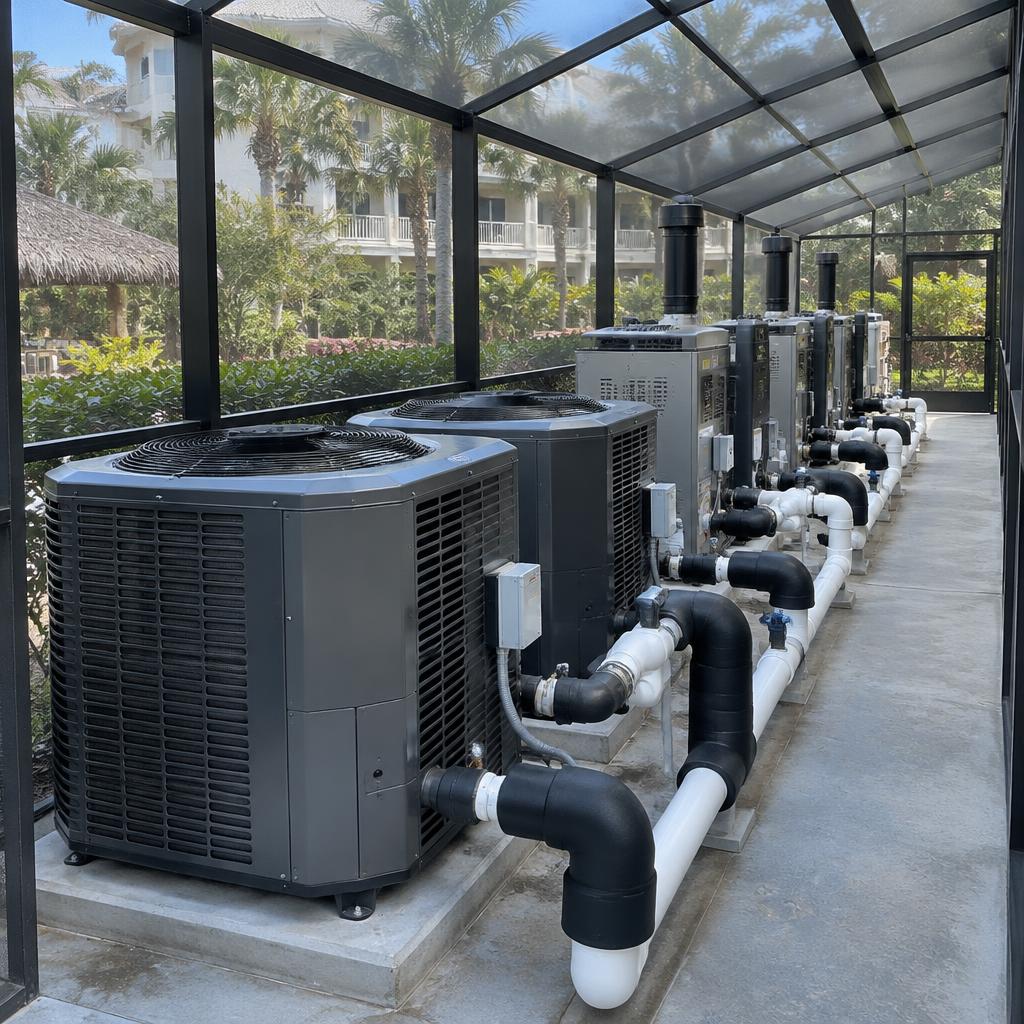
A pool heat pump has four main parts: a fan, an evaporator coil, a compressor, and a condenser. The fan pulls in air, and the coil collects heat. The compressor boosts it, and the condenser passes it to your pool water.
Fan
Pulls outside air across the coil. Simple comparison: A breeze that carries heat in.
Evaporator coil
Refrigerant absorbs heat and turns into a gas. Simple comparison: A sponge soaking up heat.
Compressor
Squeezes the gas and makes it very hot. Simple comparison: A bike pump that warms as you pump.
Condenser
Passes heat to the pool water. Simple comparison: A radiator for your pool.
Step-by-Step: How a Pool Heat Pump Heats Your Water
Here is the full path in plain steps. Pool water flows through the heater while a fan pulls in air. The refrigerant picks up heat, gets compressed, and transfers the heat to your water. Then the cycle repeats as long as the heater runs.
Step 1: Water Flows In
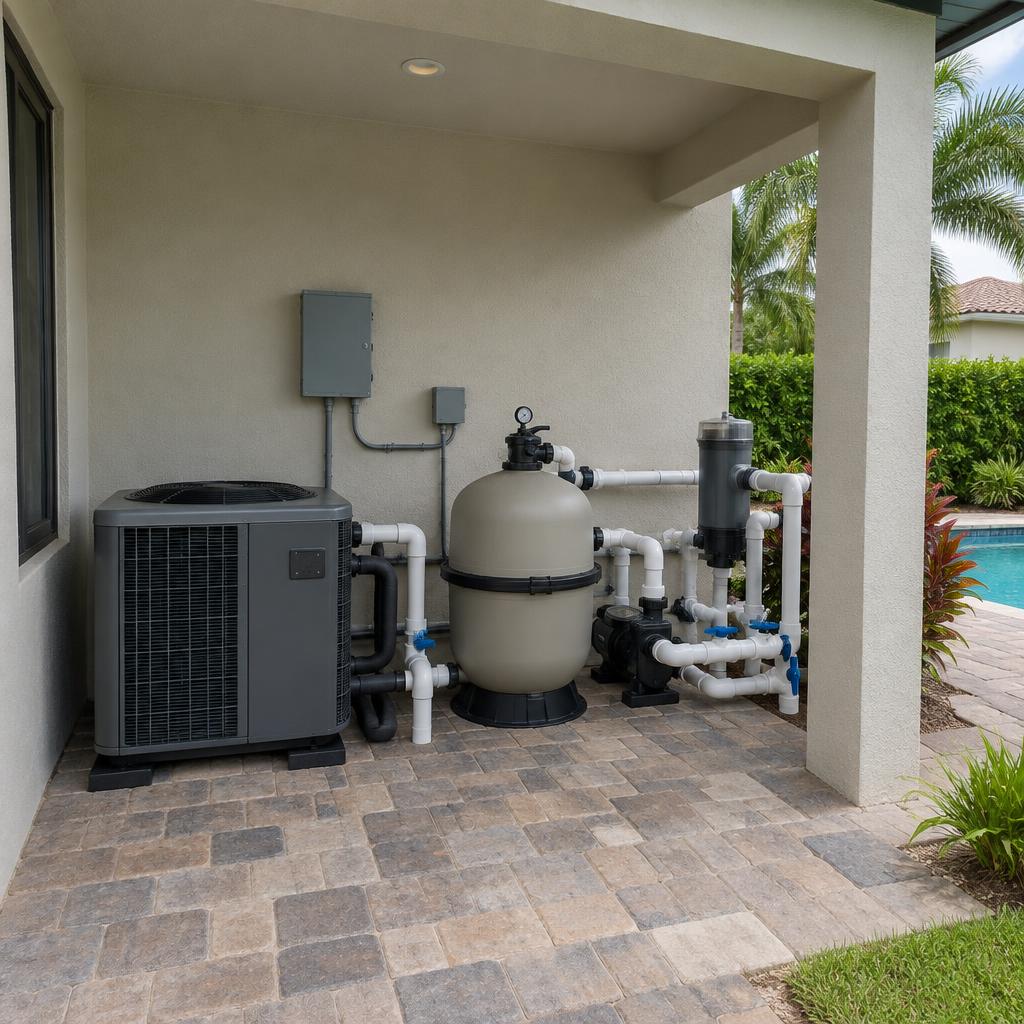
Everything starts with your pool pump. It pulls water from the pool and sends it through the filter first. Clean water then enters the heat pump. Without steady flow, the heater cannot work, so a clean filter matters.
Step 2: The Fan Pulls In Air
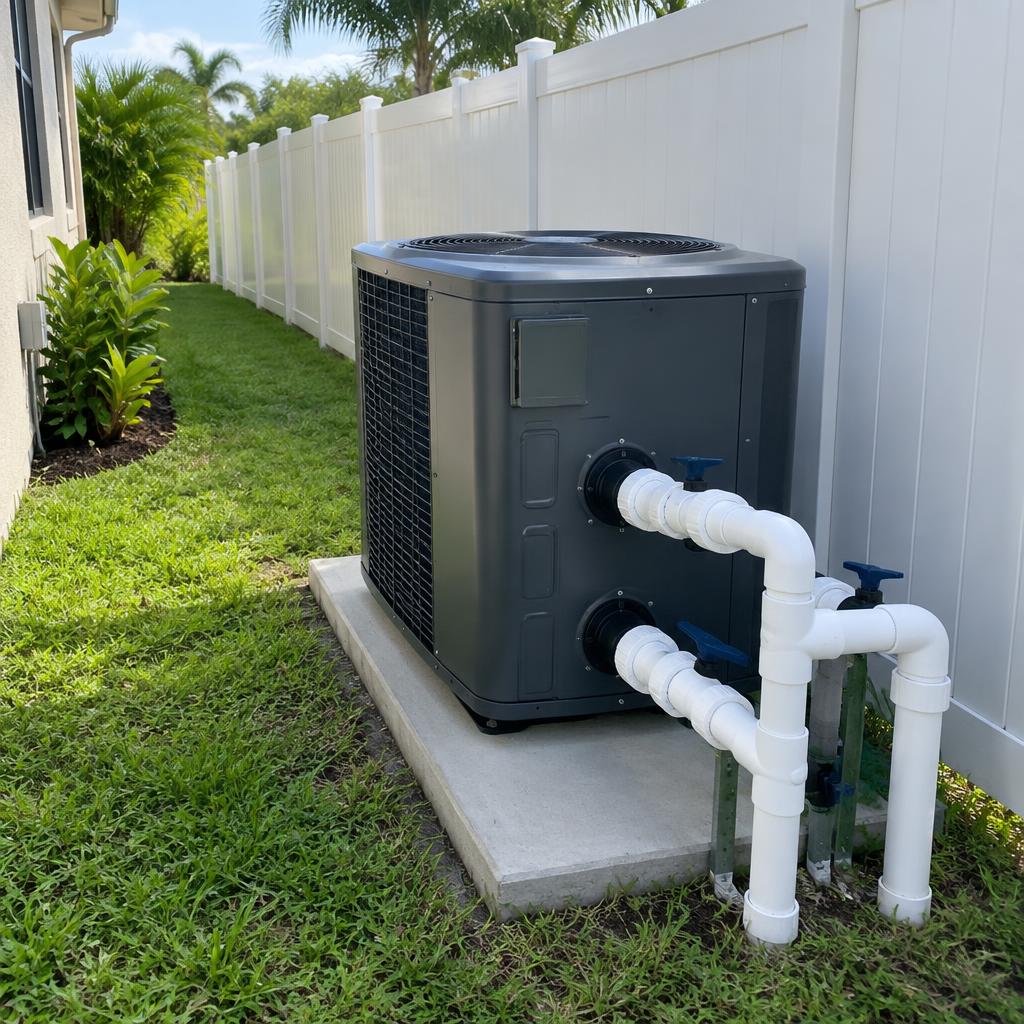
Next, a fan on the unit spins and pulls outside air inside. The air flows across a coil called the evaporator coil. Even on a mild day, that air holds plenty of heat. Warmer air gives the unit more heat to collect.
Step 3: The Refrigerant Absorbs Heat
Inside the coil is a liquid called refrigerant. It works much like the fluid inside your air conditioner. As warm air passes by, the liquid soaks up the heat and turns into a gas. Think of a puddle drying in the sun. Heat changes the liquid into vapor.
Step 4: The Compressor Adds Heat
The warm gas then flows into the compressor. The compressor squeezes the gas into a smaller space. Squeezing makes the gas much hotter, like the air in a bike pump getting warm. Now the gas is hotter than your pool water.
Step 5: The Condenser Warms Your Water
The very hot gas moves into the condenser. Your pool water flows past it at the same time. Heat passes from the hot gas to the cooler water, the way a warm mug heats your hands. Your water gets a little warmer with every pass.
Step 6: Warm Water Returns to Your Pool
The warmed water flows back into your pool. Meanwhile, the gas gives up its heat and cools back into a liquid. That liquid returns to the evaporator coil, and the cycle starts again. The pool water and the refrigerant never mix.
Why It Takes Time
This loop runs again and again. Each trip adds only a little heat, so your pool warms up slowly but steadily. Heat pumps work best when you let them run. Starting a day or two before a big swim day helps.
Want a time estimate for your pool? Read How Long Does It Take a Pool Heater to Heat a Pool?
Do Heat Pumps Work in South Florida?
Yes. Heat pumps work very well in South Florida. They run best when outside air is above 50°F, and most days here stay warmer than that. On a rare cold night, the unit may slow down, so a cover helps hold the heat.
The Department of Energy says heat pumps lose efficiency when the air drops below 50°F. It also shows how much a cover matters. In its Miami example, heating a 1,000-square-foot pool at 78°F all year costs about $1,499 without a cover. With a cover, it costs about $293.
Those figures use the Department’s sample pool and electric rate. Your own bill will differ.
Signs Your Pool Heat Pump Needs Repair
Call for repair if the water stays cold or the fan will not spin. Loud noises, error codes, or ice on the coil are also warning signs. Turn the unit off and call a licensed technician for a safe check.
Our guide on pool heater not heating lists seven common causes. Heat pumps have electrical parts and sealed refrigerant. Leave the repair to a pro.
Pure Tek Pool Heaters repairs every kind of heat pump across Palm Beach County. Homeowners who need pool heat pump repair in Boca Raton can reach a local crew that knows the area. A technician can find the cause first, then show you repair and replacement options before you spend a dime. If another company quoted a big replacement, ask for a second opinion.
Know Your Heat Pump, Keep Your Pool Warm
A pool heat pump moves heat from outside air into your pool water. A fan, a coil, a compressor, and a condenser make it all happen. It is efficient, steady, and well-suited to South Florida. Keep the unit serviced and the pool covered for years of warm swims.
When your heater needs a checkup, a quick call to a local team can keep your pool warm all season.
Frequently asked questions
A pool heat pump pulls heat from outside air and moves it into your pool water. A fan blows air over a coil, a refrigerant absorbs the heat, and a compressor boosts it. The hot refrigerant then passes that heat to the water.
They work best above about 50°F. Below that, they lose efficiency and use more energy. In South Florida, most days stay mild, so heat pumps work well here. On cold nights, a pool cover helps hold heat. Gas heaters handle cold weather better.
For most pool owners who swim often, yes. Heat pumps cost more to buy than gas heaters, but they usually cost less to run. The Department of Energy says they typically last longer with proper care. If you swim only now and then, a gas heater may fit better.
With proper installation and maintenance, pool heat pumps can last 10 or more years, according to the Department of Energy. Yearly tune-ups, clean filters, and clear airflow all help. Skipped service and poor water flow can shorten the life of your unit.
Common causes include low water flow, a dirty filter, a low refrigerant level, or a failing part. Weather and a too-small unit can also slow heating. Check your filter and pool pump first. Then call a technician, since heat pumps have electrical parts and sealed refrigerant.
Heat pumps are efficient because they move heat instead of making it. The Department of Energy says they return 3 to 7 units of heat for each unit of electricity. A cover, a right-sized unit, and a steady setting keep your bill lower.
Related services
More guides
- Heat Pump vs. Gas Pool Heater in South Florida
- How Much Does a Pool Heater Cost in Palm Beach County?
- Pool Heater Not Heating: 7 Common Causes
- When to Repair vs. Replace a Pool Heater
- When to Turn On Your Pool Heater in Florida: Month-by-Month Guide
- What Is the Ideal Pool Temperature? Swimming, Kids, Seniors, and Therapy
- How Long Does It Take a Pool Heater to Heat a Pool?
- What Size Pool Heater Do You Need? BTU and Sizing Explained
- Propane vs. Natural Gas Pool Heaters: Which Is Better?
- Inverter vs. Standard Pool Heat Pumps: Is the Upgrade Worth It?