POOL HEATER GUIDE
Pool Heater Not Heating: 7 Common Causes
By PureTek Pool Heaters · Last updated
Few things are more frustrating than a pool heater that turns on, hums along, and leaves the water just as cold as before. The good news is that many no-heat problems trace back to a short list of causes, and some can be spotted with a quick look at the equipment pad.
Below are seven of the most common reasons a pool heater is not heating, roughly in order of how often we see them. Always switch off power at the breaker before touching anything, and leave gas, refrigerant, and electrical repairs to a qualified technician.
1. Low water flow
Pool heaters have a safety switch that keeps them from firing when not enough water is moving through them. A dirty filter, full skimmer or pump basket, a partly closed valve, or a pump running at too low a speed can all reduce flow. Clean the baskets, check your filter pressure, and confirm the valves are in their normal positions. If the heater shows a flow or pressure message, this is the first place to look.
2. Thermostat or settings
It sounds obvious, but it is common: the set temperature is lower than the water, the heater is in the wrong mode (pool versus spa), or a timer or automation system is not calling for heat. Check that the target temperature is above the current water temperature and that any automation schedule includes heating hours.
3. Dirty or blocked airflow on a heat pump
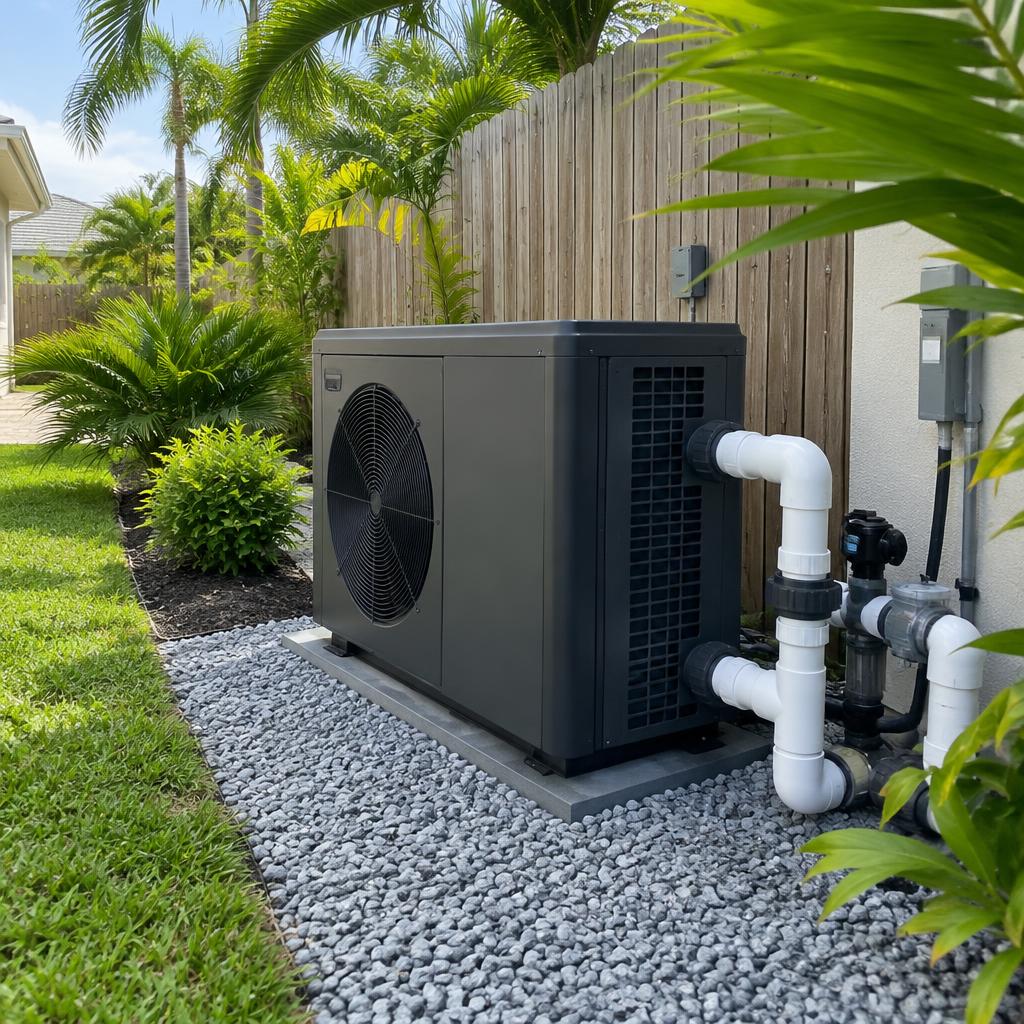
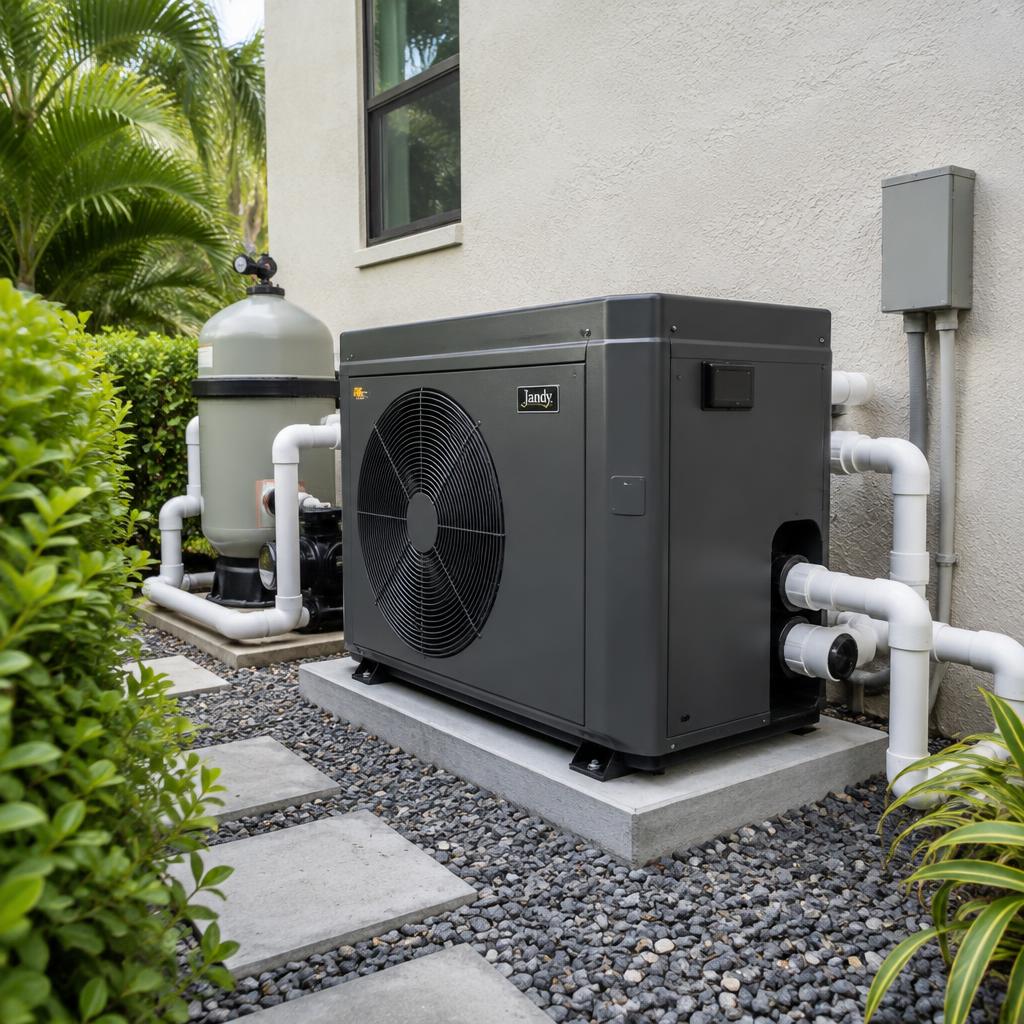
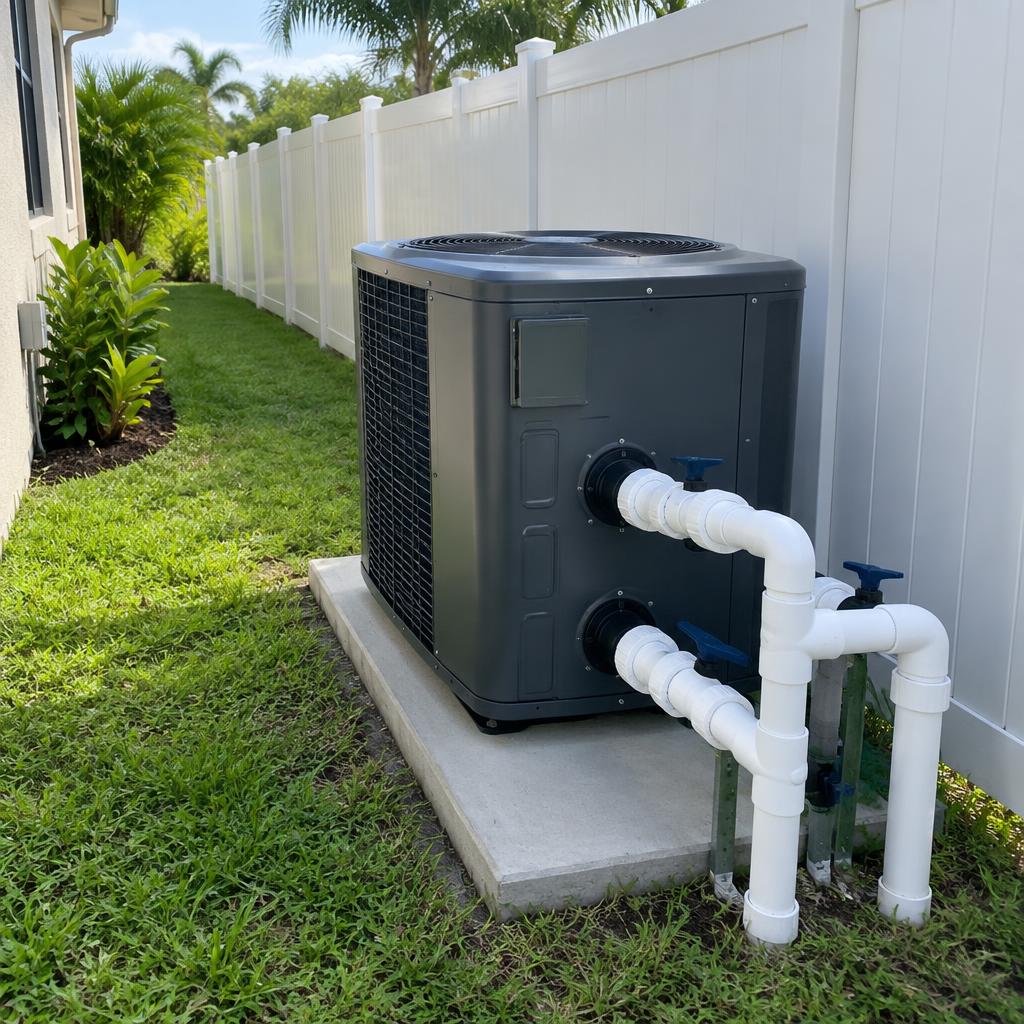
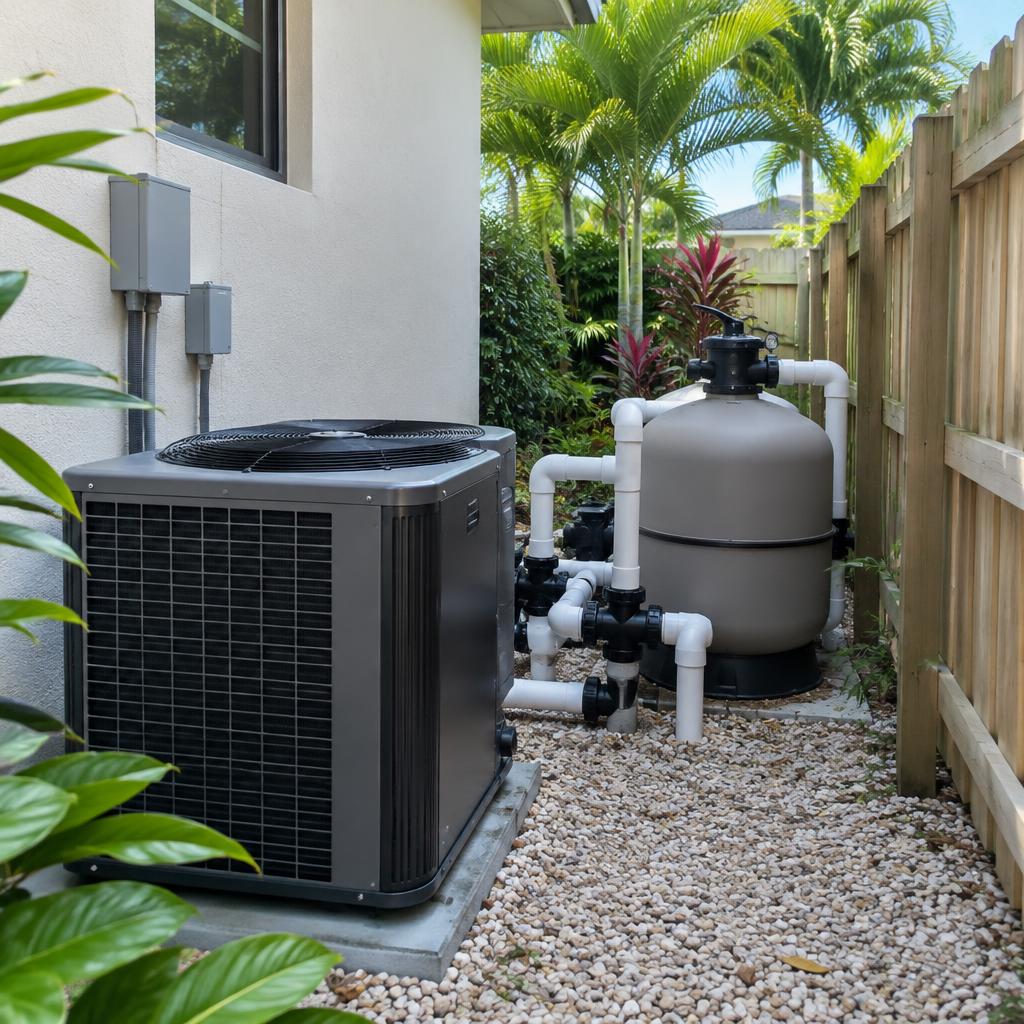
Heat pumps pull warmth out of the air, so anything blocking the coil or fan cuts performance sharply. Leaves, landscaping, debris, or a fence built too close can starve the unit of air. Keep at least a couple of feet clear around the sides and plenty of space above the fan. A heavily dirty coil may need professional cleaning.
4. Cold air temperatures
During a cold front, a heat pump slows down because there is less heat in the air to collect. It may be running correctly yet struggling to keep up. A pool cover overnight helps hold heat. If the pool is cold even when the weather is mild, the cause is likely something else on this list.
5. Faulty sensors or pressure switches
Heaters rely on temperature sensors, water pressure switches, and other safety devices. When one fails or gives a false reading, the control board may refuse to heat or shut the unit off quickly. These parts are often among the more affordable repairs, but a technician should test them to confirm which one has failed.
6. Ignition or gas supply problems
On a gas heater, a worn igniter, a dirty burner, a faulty gas valve, or an empty propane tank can all prevent the heater from lighting. Check the propane level and make sure the gas supply valve is open. Do not attempt to work on gas components yourself; if you smell gas, leave the area and contact your gas provider.
7. Refrigerant leaks, compressor issues, or a failed control board
On a heat pump, if the fan runs but the water never warms, the issue may be low refrigerant from a leak, a failing compressor, or a bad capacitor. On either type, a damaged control board can cause erratic behavior or no heat at all. These are larger repairs that require diagnostic equipment and licensed handling of refrigerant.
What you can safely check first
Before booking a visit, check that the breaker is on, the pump is running, baskets and filter are clean, valves are open, the set temperature is correct, and the area around the heater is clear. Note any message or code on the display, or take a photo of it. That information helps a technician arrive with the right parts and can shorten the repair.
Frequently asked questions
The most common reasons are low water flow, incorrect settings, blocked airflow on a heat pump, or a failed sensor. On heat pumps, a refrigerant leak or failing compressor can also leave the fan running with no heat. A technician can test each part to find the cause.
Yes. Heaters need enough water flow to operate safely, and a clogged filter or full basket can trip the flow or pressure switch. Cleaning the filter and baskets is one of the first things to try.
Codes differ by brand and model, so check your owner's manual for the exact meaning. If you are not sure, send us a photo of the display when you request service and we will help identify it.
Simple checks like cleaning baskets, confirming settings, and clearing debris are safe with the power off. Electrical, gas, and refrigerant repairs should be handled by a qualified technician for safety and to protect your warranty.