POOL HEATER GUIDE
Heat Pump vs. Gas Pool Heater in South Florida
By PureTek Pool Heaters · Last updated
Choosing a pool heater in South Florida is different from choosing one in a cold-weather state. Our winters are short and mild, the air stays warm for most of the year, and many families want the pool comfortable from November through March rather than open in the snow. That climate shapes which heater makes the most sense for your home.
The two options most Palm Beach County homeowners compare are electric heat pumps and gas heaters (natural gas or propane). Both can keep a pool comfortable, but they work in completely different ways, cost different amounts to run, and suit different swimming habits. This guide walks through the trade-offs so you can have a more useful conversation with a technician before you buy.
How a heat pump pool heater works
A heat pump does not create heat by burning fuel. It uses electricity to run a fan and compressor that pull warmth out of the surrounding air and transfer it into the pool water through a heat exchanger. Because it moves heat instead of generating it, a heat pump can deliver several units of heat for every unit of electricity it uses.
That efficiency depends on the air around it. Heat pumps perform best when outdoor temperatures stay above roughly the mid-50s Fahrenheit, which describes most South Florida days, even in winter. On the occasional cold snap they slow down, but they rarely stop helping altogether here the way they can farther north.
How a gas pool heater works
A gas heater burns natural gas or propane in a combustion chamber and passes pool water through a heat exchanger above the flame. It heats water quickly regardless of the air temperature, which makes it the faster option for raising the temperature on demand.
That speed comes at a cost. Gas heaters burn fuel continuously while running, so operating costs are usually higher than a heat pump for the same amount of heat, and gas prices can swing from season to season. Propane tanks also need refills and safe placement, and natural gas requires an available line to the property.
Side-by-side comparison
Here is how the two types usually compare for a typical residential pool in Palm Beach County:
Running cost
Heat pumps are generally far cheaper to operate month to month in our climate. Gas costs more per degree of heat delivered.
Heat-up speed
Gas wins. It can raise a cold pool or spa much faster. Heat pumps warm the water gradually and are best at holding a steady temperature.
Upfront cost
Prices overlap, but heat pumps often cost more to buy, while gas units can need gas line or tank work. Installed projects we see typically run $4,000 to $9,000 depending on equipment and site work.
Lifespan and upkeep
Both last many years with regular maintenance. Heat pumps have fewer combustion parts; gas heaters need burner, igniter and venting checks.
Best fit
Heat pumps suit pools used regularly through the season. Gas suits spas, occasional use or owners who want heat quickly on short notice.
Which one makes sense for most South Florida homes?
For most homeowners here who want a comfortable pool across the cooler months, a correctly sized heat pump is the practical choice. The mild air lets it run efficiently, and keeping the pool at a set temperature costs less than reheating it from scratch with gas each weekend.
Gas still has a strong case in a few situations: an attached spa that you want hot in under an hour, a pool used only a handful of times each winter, a home that already has natural gas at the equipment pad, or a property where both are installed together. Some families pair a heat pump for daily maintenance heating with a gas heater for quick spa boosts.
Sizing and placement matter more than the brand
An undersized heater of either type will run constantly and struggle to reach your target temperature. Proper sizing considers the pool's surface area and volume, whether it has a spa, how exposed it is to wind and shade, whether you use a solar cover, and how warm you want the water.
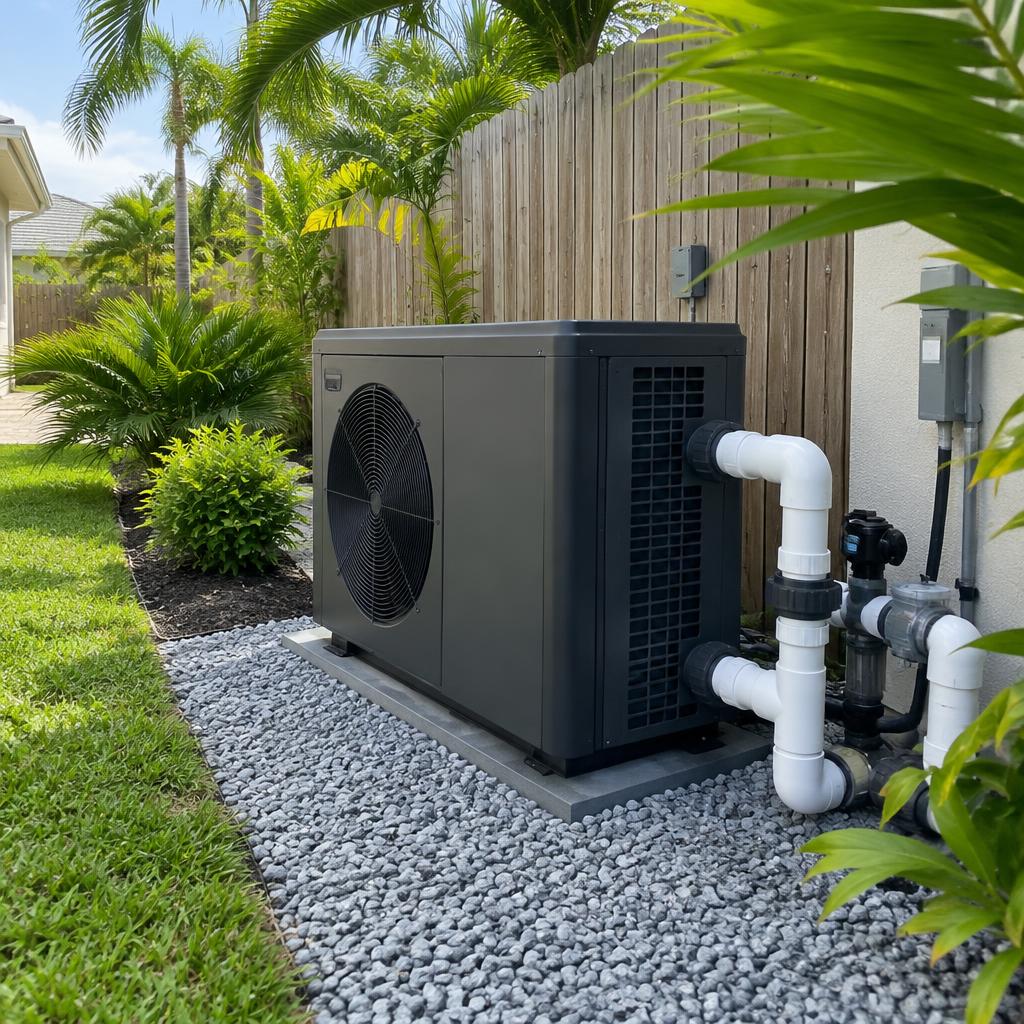
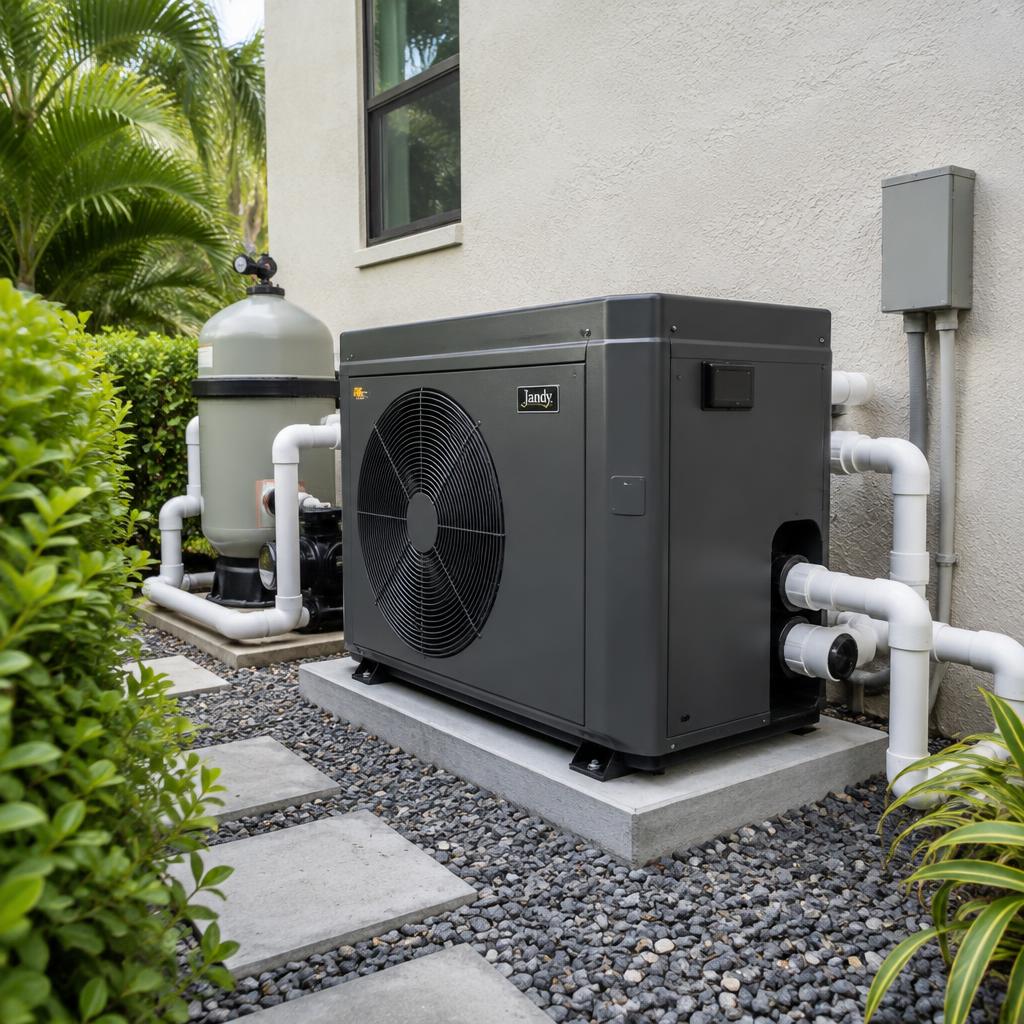
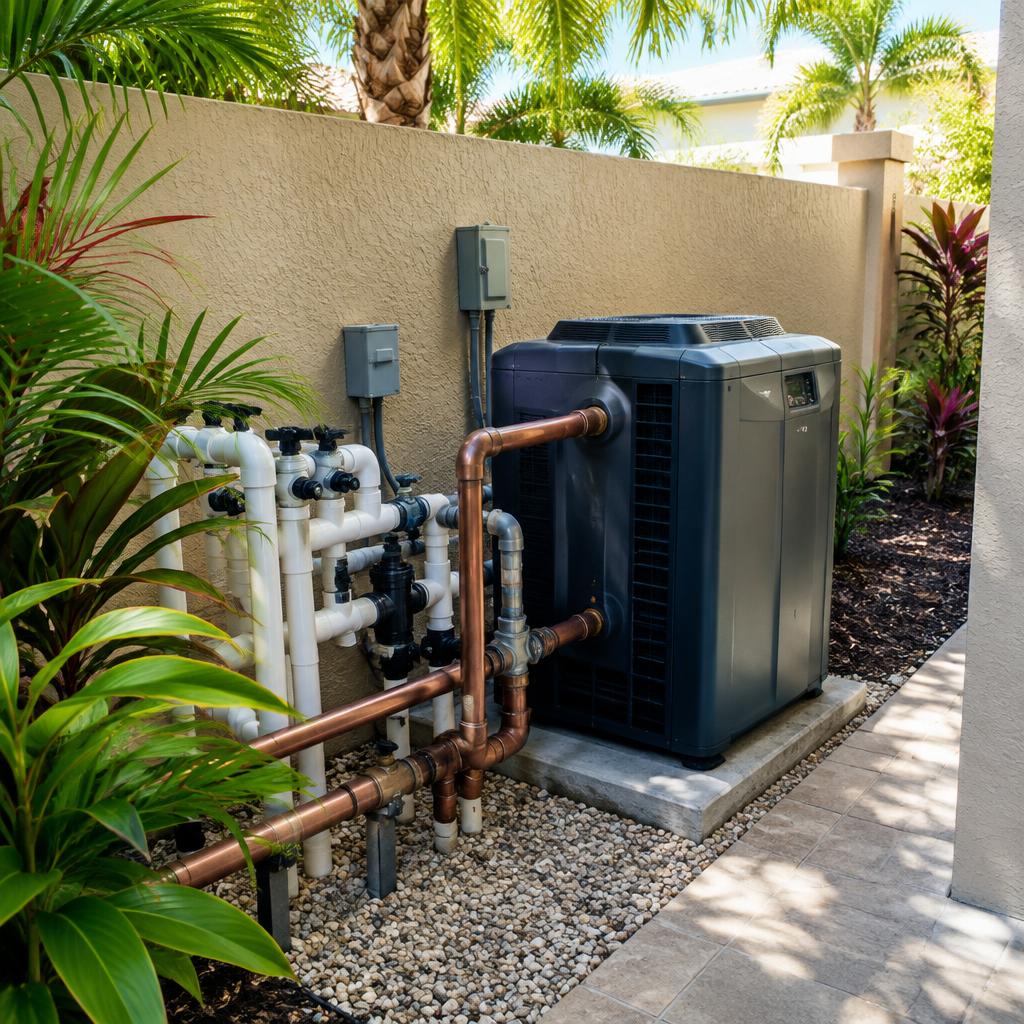
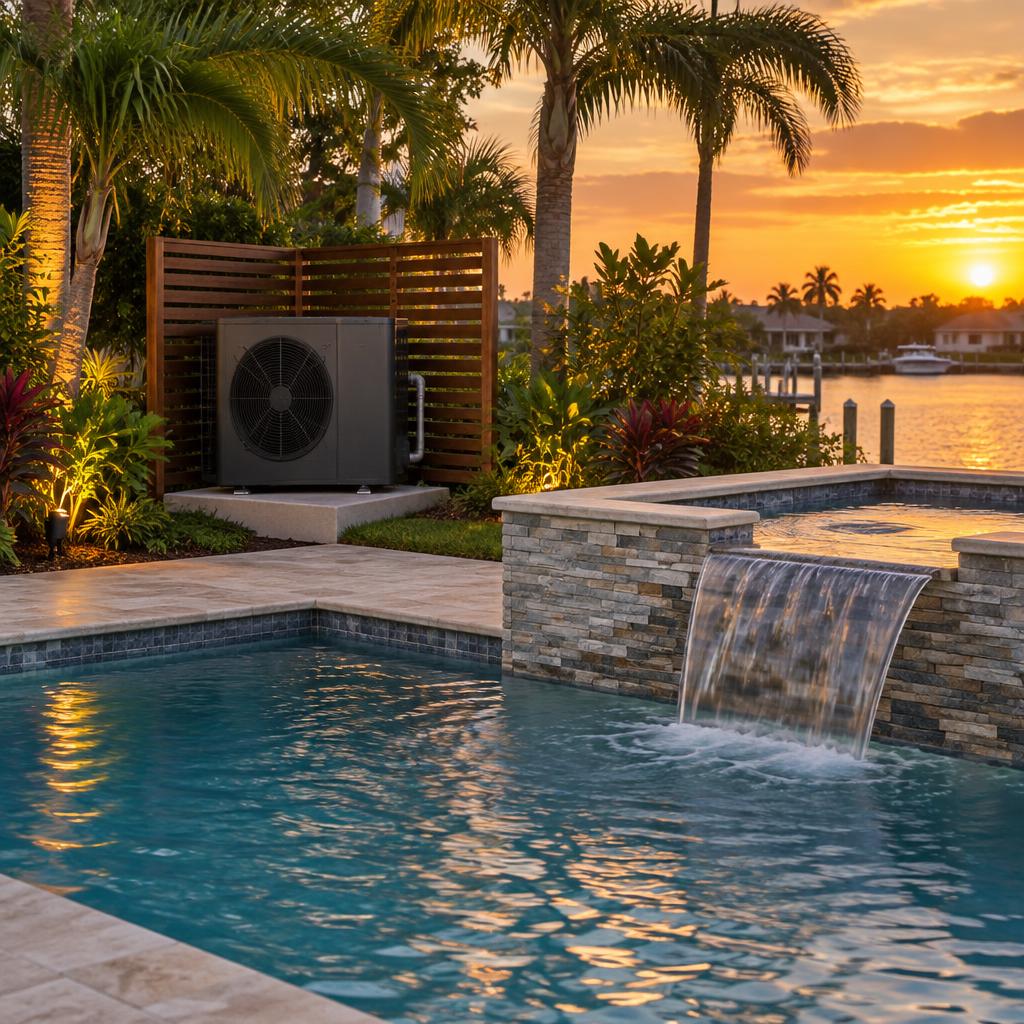
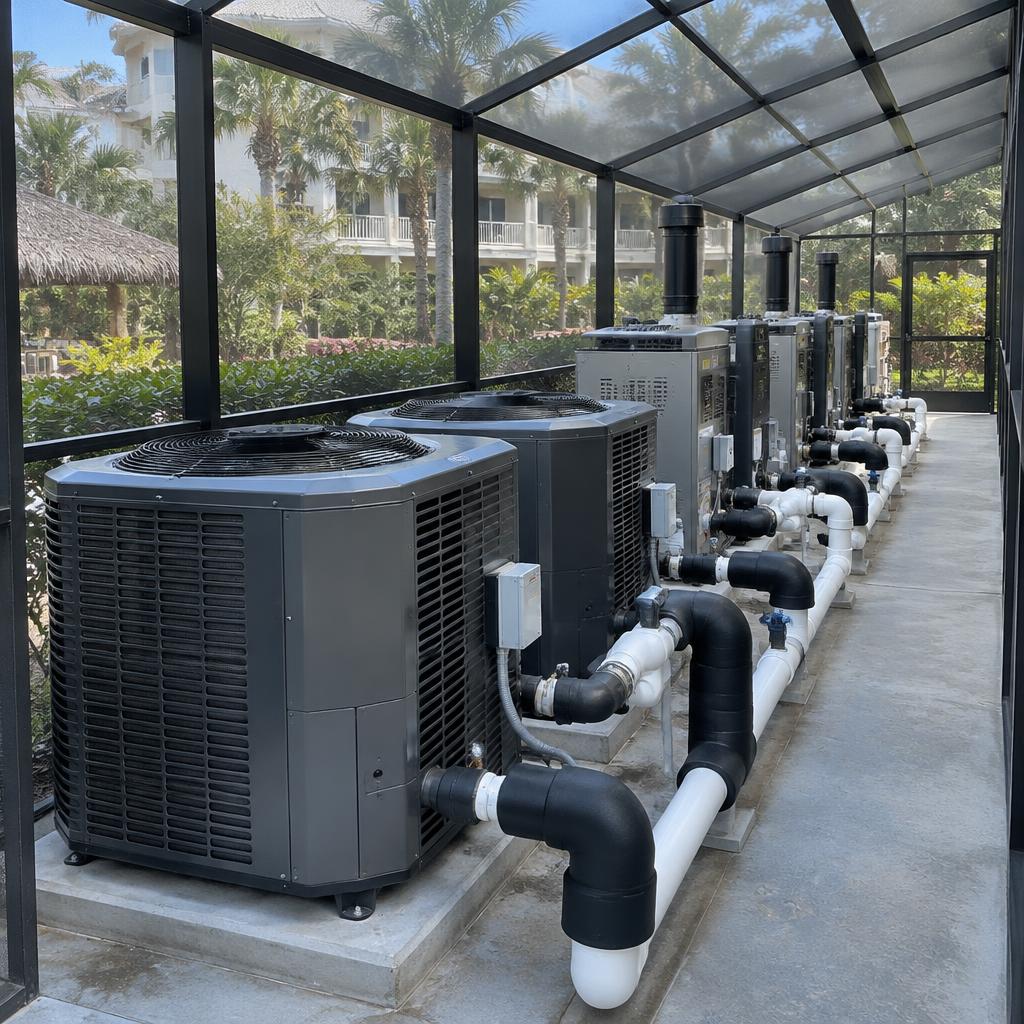
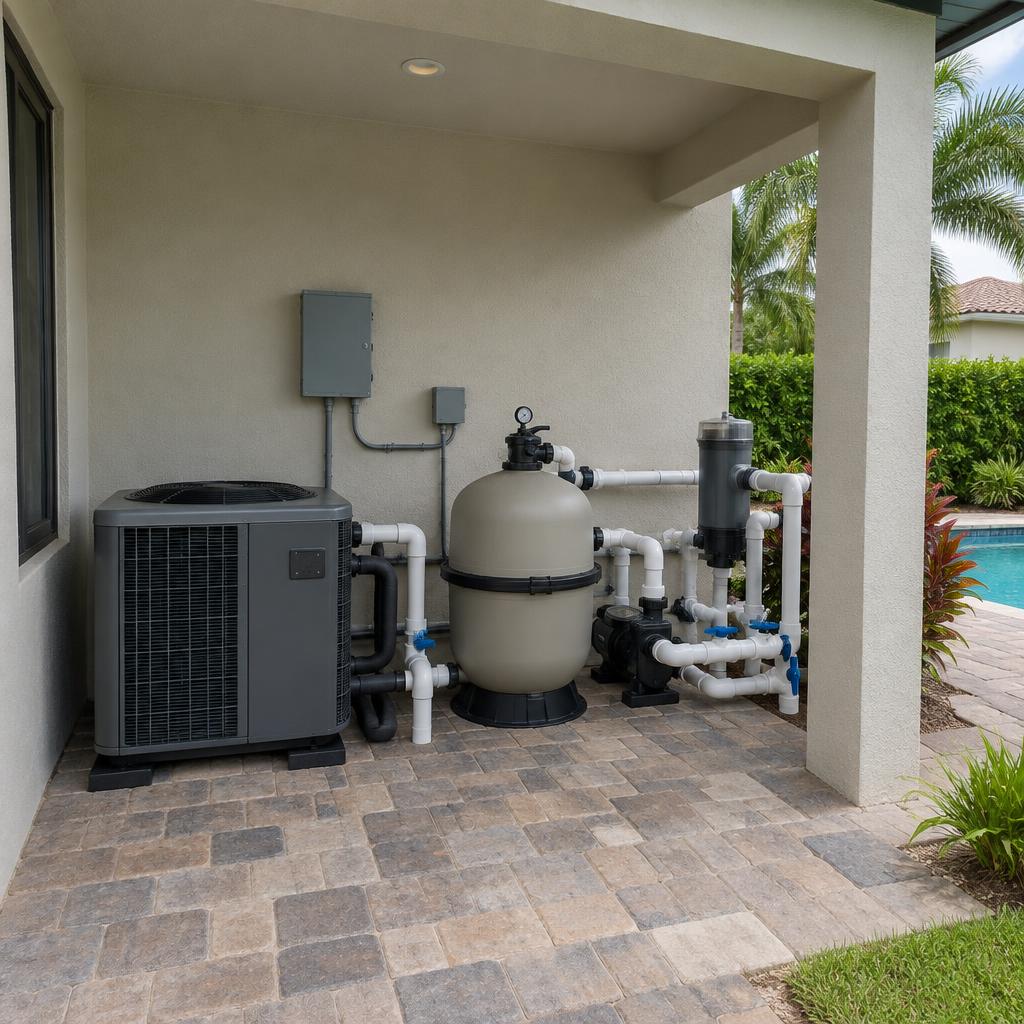
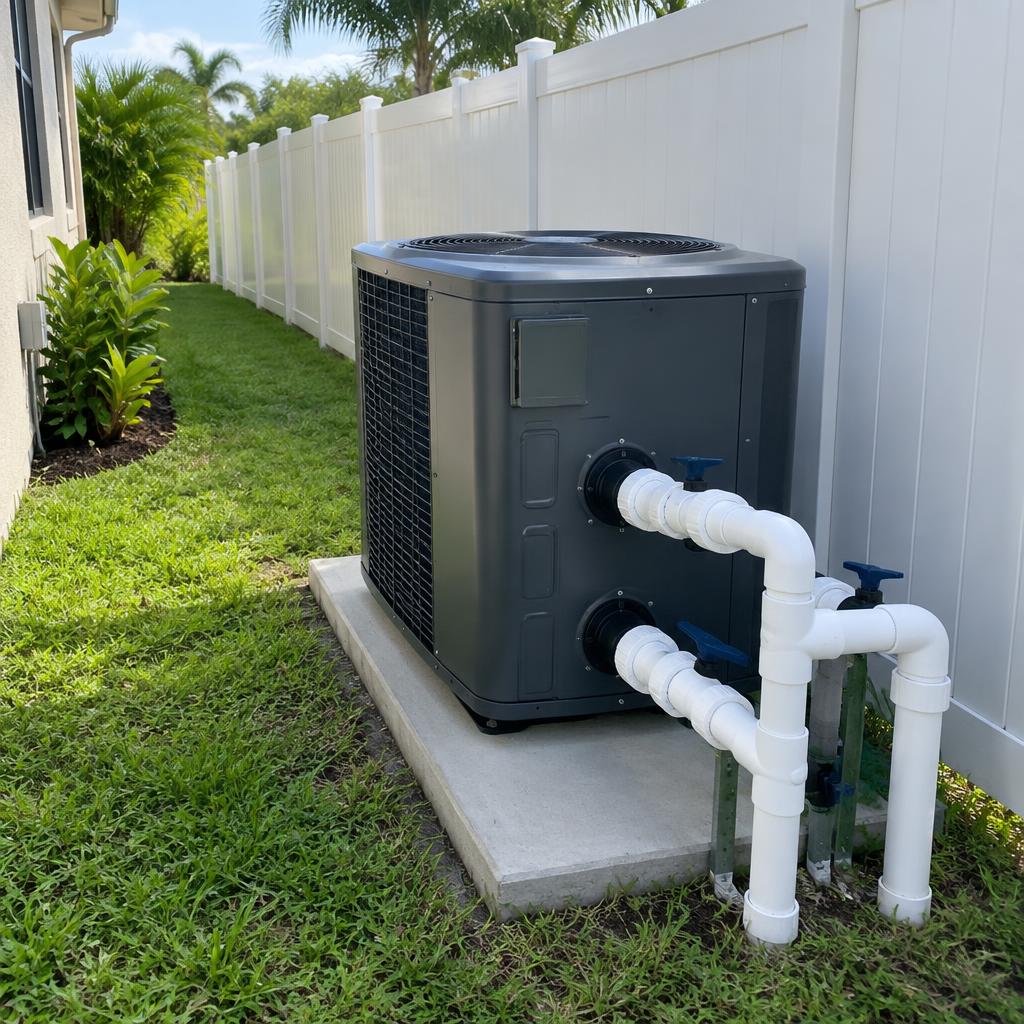
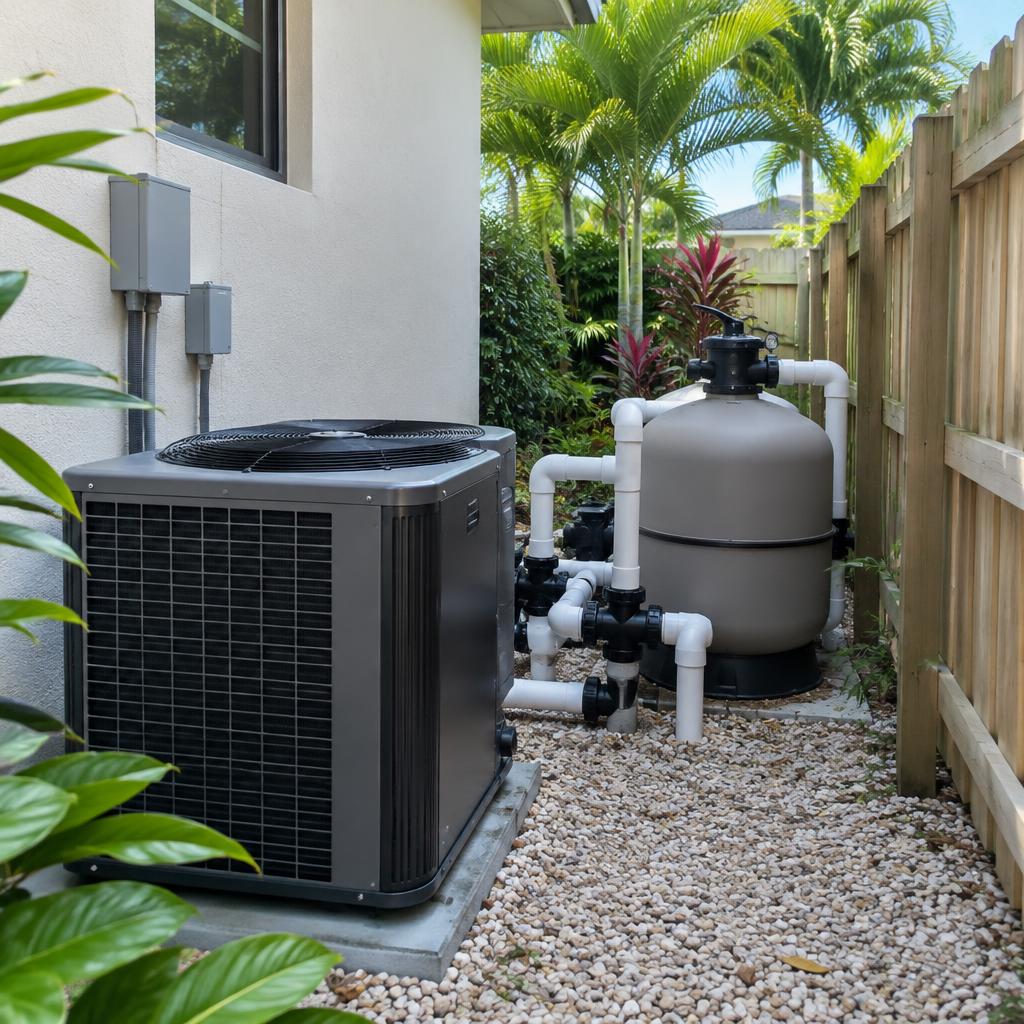
Placement matters too. Heat pumps need open airflow around the unit and should not sit where they recirculate their own cold exhaust air. Gas heaters need safe clearances and venting. Both are usually installed with the rest of the pool equipment, often along a side yard or behind a screen, rather than right next to the water.
Questions to ask before you buy
Ask your installer how they sized the heater and for which target temperature, what the expected running cost looks like for your usage, what electrical or gas work is required, and what manufacturer warranty applies. A good installer will explain the choice in plain terms instead of pushing one product. If you already have a heater that is struggling, it may also be worth checking whether repair is still sensible before replacing it.
Frequently asked questions
In most cases a heat pump is cheaper to run here because our air stays warm enough for it to work efficiently through most of the winter. Gas heaters burn fuel the whole time they operate, so each degree of heat usually costs more. Your actual costs depend on pool size, target temperature, and how often you heat.
Yes, though it slows down when the air gets cold. Heat pumps lose efficiency as outdoor temperatures drop, but our cold snaps are usually brief. Using a pool cover overnight helps the pool hold the heat it gained during the day.
Yes. Some homeowners use a heat pump to keep the pool at a steady temperature and a gas heater to quickly warm an attached spa. A technician can plan the plumbing and controls so both work together.
A gas heater can raise the temperature noticeably within hours. A heat pump works more gradually and may take a day or more to bring a cold pool up to temperature, then holds it there efficiently. That is why heat pumps are usually left running through the season.